Access significant and up-to-date high court judgments for legal insights and precedent. Stay informed about the latest legal decisions and their impact on various areas of law.
Corporate Law : The Madhya Pradesh High Court held that judicial officers cannot be intimidated for delivering judgments since every judicial orde...
Corporate Law : The article argues that failure to comply before the AO or CIT(A) can lead to adverse assessments, as higher forums generally cann...
Corporate Law : The Bombay High Court held that merely organising protests or morchas against government decisions cannot justify externment. It r...
Corporate Law : The Delhi High Court held that an unnatural death in police custody attracts constitutional liability under Article 21, even if ca...
Income Tax : The Calcutta High Court quashed a Section 143(3) assessment after finding that the assessee was denied a meaningful opportunity of...
Corporate Law : The Supreme Court upheld joint insolvency proceedings against two interconnected real estate companies due to common management an...
Corporate Law : Supreme Court ruled that CoC and RP can surrender financially burdensome assets voluntarily, clarifying moratorium under section 1...
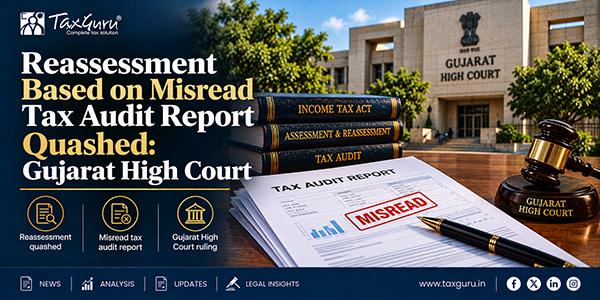
Income Tax : Gujarat HC has directed CBDT to ensure that there is a mandatory one-month gap between date for furnishing tax audit reports (unde...
Income Tax : Rajasthan High Court granted a one-month extension for filing TARs under Section 44AB for AY 2025-26, citing delayed audit utility...
Income Tax : The Gujarat High Court is hearing a petition from the Chartered Accountants Association regarding persistent glitches on the new I...
Income Tax : The Court quashed criminal proceedings after finding that the petitioner had ceased to be a director before the due date for filin...
Income Tax : Having regard to the gravity of the allegations, the ongoing investigation, the requirement of further probe into digital and fina...
Income Tax : The Orissa High Court ruled that an ITAT appeal cannot be dismissed merely because the authorised representative violated the virt...
Goods and Services Tax : Karnataka HC directed the State to determine and reimburse differential GST arising from GST implementation on works contracts, su...
Goods and Services Tax : Madras HC held tobacco remains unmanufactured where no new product emerges, setting aside higher compensation cess demand and recl...
Income Tax : The Court held that membership cannot be granted where the underlying flats do not exist and are merely refuge areas. It ruled tha...
Corporate Law : Bombay High Court implements "Rules for Video Conferencing 2022" for all courts in Maharashtra, Goa, and union territories, effect...
Income Tax : CBDT raises monetary limits for tax appeals: Rs. 60 lakh for ITAT, Rs. 2 crore for High Court, and Rs. 5 crore for Supreme Court, ...
Corporate Law : The Delhi High Court mandates new video conferencing protocols to enhance transparency and accessibility in court proceedings. Rea...
Income Tax : Income Tax Department Issues Instructions for Assessing Officers after Adverse Observations of Hon. Allahabad High Court in in Civ...
The Karnataka High Court set aside an assessment order after finding that the assessee was given only three hours’ notice for a video conference despite seeking a later hearing. The matter was remanded with directions to provide a proper opportunity to reply and participate in a fresh hearing.
The High Court held that a GST penalty order passed without issuing a prior show cause notice violates Section 75(4) of the CGST Act and principles of natural justice. The penalty was quashed with liberty to initiate fresh proceedings in accordance with law.
The Bombay High Court held that bad debt deduction cannot be denied where the debt was effectively written off through accounting entries despite the debtor’s account remaining open due to pending litigation. The ruling emphasizes substance over accounting form.
The Calcutta High Court held that a sanction order must reflect consideration of the taxpayer’s explanation and provide reasons for rejecting it. As these requirements were absent, the sanction order was quashed and remanded for reconsideration.
The Allahabad High Court held that information regarding cash deposits constituted relevant material for issuing a notice under Section 148. It dismissed the writ petition while permitting the assessee to pursue the statutory appellate remedy.
The Allahabad High Court refused to recall its earlier judgment after holding that it had already delivered a detailed decision on merits and that no valid ground for recall was established.
The Calcutta High Court granted the taxpayer an opportunity to reply after finding that the show cause notice was not received. The GST authority was directed to pass a fresh reasoned order after hearing the petitioner.
The Telangana High Court held that a GST registration cancellation notice was valid because the accompanying documents clearly conveyed the allegations and enabled the taxpayer to respond effectively.
The Telangana High Court held that although relief under the Vivad Se Vishwas Scheme could not be revived after the scheme expired, the taxpayer should not be left without a remedy. The Court directed restoration of the withdrawn appeals for decision on merits.
The Telangana High Court declined to entertain the writ petition because the GST Appellate Tribunal (GSTAT) is now functional and provides an effective statutory appellate remedy. The Court permitted the petitioner to file an appeal before the GSTAT within the prescribed window period after making the required statutory deposit.