Company Law India: Read latest Company law news & updates, acts, circular, notifications & articles issued by MCA amendment in companies Act 2013. Article on Loans Company formation XBRL, Schedule VI IFRS.
Company Law : The article explains the legal framework governing debenture issuance under the Companies Act, 2013. It outlines the types of debe...
Company Law : Section 42 of the Companies Act, 2013 permits companies to raise funds from a select group of investors through private placement....
Company Law : The 2025 amendments significantly expand the scope of fast-track mergers by allowing more categories of companies, including eligi...
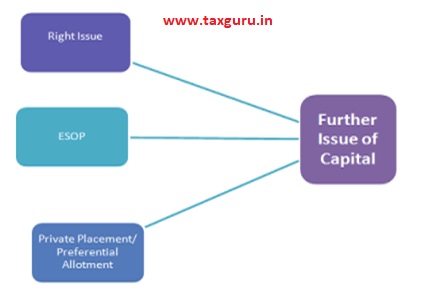
Company Law : The article explains the legal framework governing share capital and share issuance under the Companies Act, 2013. It highlights h...
Company Law : The article explains how Section 118 mandates the preparation and preservation of meeting minutes to ensure transparency and accou...
Company Law : The MCA has widened CSR eligibility by recognizing subscriptions to Zero Coupon Zero Principal Instruments as a valid CSR activity...
Company Law : Provisional list of audit firms of listed companies yet to file NFRA-2 for 2023-24. Filing deadline was 30.11.2025; fines apply fo...
Company Law : ICSI recommended restoring public access to basic company master data without mandatory login requirements. The representation sta...
Company Law : The issue concerns eligibility and participation rules for the convocation. ICSI has clarified that members who do not attend will...
Company Law : NFRA introduced guidelines to evaluate audit firms’ compliance and quality control systems. The framework emphasizes governance,...
Company Law : Resolution Professional (RP) was fully justified in seeking possession through the insolvency process itself, the NCLAT affirmed t...
Company Law : The NCLAT held that unregistered profit-sharing agreements do not create leasehold or occupancy rights in immovable property. The ...
Company Law : While approving the resolution plan, NCLT clarified that exemptions relating to taxes, duties, and statutory compliances must be o...
Company Law : A Successful Resolution Applicant (SRA) could not avoid a CoC-approved resolution plan by claiming that the Letter of Intent (LoI)...
Company Law : NCLAT held that the order appointing the Resolution Professional under Section 97 was obtained on the basis of misrepresented a...
Company Law : The MCA has amended the valuation rules to require Registered Valuer Organisations to maintain a minimum paid-up capital of ₹25 ...
Company Law : The Registrar of Companies penalized the company and its authorized signatory after an incorrect document was attached with Form A...
Company Law : MCA amends Schedule VII of the Companies Act to include subscription to zero coupon zero principal instruments on Social Stock Exc...
Company Law : MCA has amended the CSR Rules to recognize zero coupon zero principal instruments issued by Social Stock Exchange-listed NPOs. The...
Company Law : ROC Mumbai held that repeated return of official notices proved non-maintenance of a registered office under Section 12(1) of the ...
In present facts of the case the Hon’ble High Court have allowed the writ petition filed by the Company, wherein it was held that so far as the ownership of land is concerned, each company has right to purchase property and the Benami Act, 1988, would not extend to properties purchased by the company.
Section 135(1) of the Companies Act 2013, deals with the CSR provisions and constitution of CSR committee. Modes of spending CSR expenditure: As per Rule 4(2), Companies can spend on CSR activity through any of the below 3 ways. 1. Eligible Companies coming together to form a Trust, Society, or Section 8 Company for conducting CSR […]
Generally, there are two types of shareholders in the company- Registered shareholder and Beneficial Shareholder. Registered shareholders are those whose names are registered as shareholder in the register of members of the company. On the other hand, beneficial shareholders are that shareholders whose name is not entered in the register of members however they hold […]
As per the ICSI UDIN Guidelines, 2019, UDIN shall be generated for the following services rendered by a PCS- 1. Certification of Annual Return in Form MGT-8 under Section 92(2) of the Companies Act, 2013 and Rule 11(2) of the Companies (Management and Administration) Rules, 2014. 2. Issuance of Secretarial Audit Report in terms of […]
Rule 8(b) provides a relaxation to a reporting company which prima facie required to comply with the requirements of Companies (Significant Beneficial Owners) Rules, 2018 (hereinafter referred to as “SBO Rules”), but if Rule 8(b) is applicable, then despite such company having a clearly identifiable SBO, shall not be required to file particulars of such SBO in Form BEN-2.
Private Company means: Sec 2(68) defined Private Company as a Company having a minimum paid up share capital, as may be prescribed and which by its articles: a) restricts the rights to transfer its shares if any; b) limit the number of member to 200, not including:- i) persons who are in the employment of […]
You know that a company is a legal entity under provisions of the Companies Act,2013 separate from its promoters, members and other stakeholders. Being a corporate person an an artificial person a company does has its own mind to perform its business.
Reserve Bank of India Vs Srei Infrastructure Finance Limited (NCLT Kolkata) 1. The Court convened via video conferencing. 2. This is an application filed by the Reserve Bank of India (Appropriate Regulator) under section 227 read with section 239(2(zk) of the Insolvency and Bankruptcy Code, 2016 (in short “IBC”) for initiations of Corporate Insolvency Resolution […]
Mystery of Zero Audit Fees of 1.81 lacs Companies As per NFRA Report The answer is Big No? In No way It is possible to get Audit done work done without paying any single rupee for Audit!! Does any logic certify that? So How NFRA computed that – Wherefrom they have taken this data? NFRA […]
This article provides the Detailed procedure to be followed for compounding the offences under the Companies Act, 2013. IMPORTANT NOTES: – ♦ Compounding can be done either before (or) after the institution of any prosecution. ♦ The compounding authority has no power to impose fine which exceeds the maximum amount of fine which may be […]