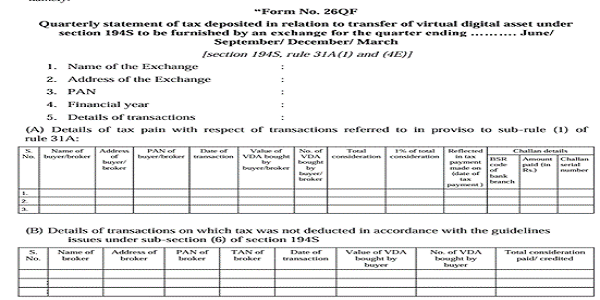
Income Tax : Understand Section 194S of the Income Tax Act on 1% TDS for Virtual Digital Asset transfers, including deductor rules, compliance,...
Income Tax : ITAT Mumbai quashes reassessment (AY 13-14, 14-15) as AO missed the Rajeev Bansal-mandated "surviving limitation." S. 149 prevails...
Income Tax : Analysis of the Rajeev Bansal Supreme Court ruling on reassessment approvals, clarifying complexities in Section 151 and its impac...
Income Tax : Explore key court rulings on reassessment under Section 148 post-2021 amendments, covering procedural changes, taxpayer rights, an...
Company Law : Overview of Section 149 of the Companies Act, 2013: Board composition, women directors, resident and independent directors' roles,...
Income Tax : Learn about the new block assessment provisions for cases involving searches under section 132 and requisitions under section 132A...
Income Tax : Discover how Finance Act 2021 revamped assessment and reassessment procedures under Income-tax Act, impacting notices, time limits...
Income Tax : The Tribunal held that the reassessment notice issued on 26.07.2022 was beyond the permissible timeline under the surviving limita...
Income Tax : Mumbai ITAT held that reassessment notice issued under Section 148 for AY 2015-16 on 31.07.2022 was barred by limitation under Sec...
Income Tax : ITAT ruled that appellate powers under Section 251 are confined to assessment year under appeal. Directions to reopen completed as...
Income Tax : The Tribunal ruled that the Revenue must establish a direct connection between seized material and the assessee’s taxable income...
Income Tax : Hyderabad ITAT held that a notice issued under Section 148 after six years from the end of AY 2015-16 was invalid. The Tribunal ru...
Custom Duty : Learn how to file and process Bill of Entry amendments at Jawahar Lal Nehru Custom House. Get insights on self-approval and office...
The Tribunal ruled that the Assessing Officer could issue a reassessment notice only within the balance days available after excluding the stayed period. Issuance beyond that surviving window renders the notice time-barred.
The assessment based on a second notice issued in July 2022 was quashed as time-barred. Once limitation had expired, subsequent notices could not revive reassessment jurisdiction.
The Tribunal ruled that repeated reopening cannot survive where statutory timelines are breached. A reassessment initiated beyond the permissible surviving period was quashed in entirety.
The Tribunal held that reassessment proceedings initiated after the statutory limitation period were invalid. Following the Supreme Courts ruling on reassessment timelines, the entire reopening and resulting additions were quashed.
Addition of ₹2.28 crore made as long-term capital gains in the hands of the assessee society was deleted in full as amount paid by a developer directly to individual members of a co-operative housing society pursuant to redevelopment cannot be taxed as capital gains in the hands of the society, particularly when the society itself never received the amount.
The issue was whether a reassessment notice issued after 31.03.2021 for AY 2014-15 was within limitation. ITAT held the notice time-barred in light of the Supreme Court’s Rajeev Bansal ruling and quashed the entire reassessment.
It was ruled that a reassessment notice issued after expiry of the extended limitation is void. The takeaway is that delayed action under the new reassessment regime is fatal.
ITAT held that Section 153C cannot be invoked where the satisfaction/hand-over date is after 01.04.2021, quashing multiple assessments framed thereafter. The ruling follows the Madras High Court and reinforces Section 153C(3)’s statutory bar.
The tribunal held that the reassessment notice issued by relying on COVID-era extensions was invalid due to procedural lapses. As a result, the entire reassessment and addition were set aside.
With the reassessment notice quashed, the consequential assessment order and demand were automatically annulled. The ruling highlights that taxpayers cannot be burdened where initiation itself is unlawful.