Corporate Law : NCLAT held that the CoC may decide to liquidate a corporate debtor under Section 33(2) before inviting resolution plans, with limi...
Corporate Law : This article explains why the Insolvency and Bankruptcy Code places commercial decision-making in the hands of the Committee of Cr...
Corporate Law : The article explains how the NCLAT interpreted Section 66(1) to extend liability beyond company insiders to third parties who know...
Corporate Law : The Supreme Court held that individuals investing for financial returns rather than home ownership cannot invoke Section 7 of the ...
Corporate Law : The High Court held that a company cannot shift its registered office after approval of a resolution plan when appeals against the...
Corporate Law : IBBI has proposed amendments to CIRP, Liquidation, and Personal Guarantor Regulations to improve valuation, clarify RP duties, sim...
Corporate Law : The proposed amendments require comprehensive project-wise disclosures, technical assessments, and mandatory information in resolu...
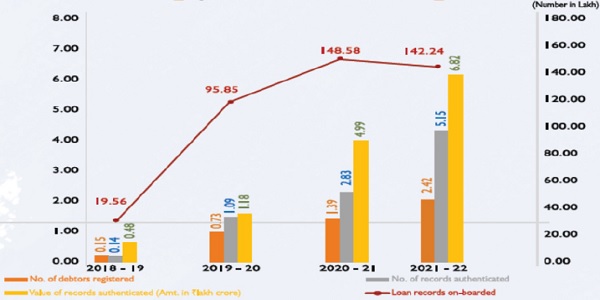
Corporate Law : The Ministry of Corporate Affairs highlighted that the IBC resolution process facilitated creditor recoveries exceeding ₹4 lakh ...
Corporate Law : The IBBI has announced contractual vacancies for Research Associates and Consultants in law and business management disciplines. T...
Corporate Law : The Supreme Court upheld joint insolvency proceedings against two interconnected real estate companies due to common management an...
Corporate Law : Bombay HC held that Section 14 IBC moratorium does not prevent deemed conveyance under Section 11 MOFA and restored the society's ...
Company Law : Kerala HC held Rule 55 empowers NCLT to accept additional pleadings, setting aside refusal to entertain further objections in a Se...
Corporate Law : NCLAT held that invoice discounting through the TReDS platform does not convert operational debt into financial debt. The appeal w...
Corporate Law : Supreme Court held that a Section 7 IBC application can proceed despite pending winding-up proceedings where no irreversible stage...
Corporate Law : NCLT admitted the Section 9 petition after holding that campaign-related emails did not constitute a genuine pre-existing dispute....
Corporate Law : IBBI cancelled an IP’s registration over systemic CIRP misuse, flawed valuations, non-disclosures, compliance failures and lack ...
Corporate Law : IBBI has released the Phase 10 syllabus for the Limited Insolvency Examination, effective from October 1, 2026, to reflect evolvin...
Corporate Law : The First Appellate Authority directed the CPIO to dispose of the RTI application after finding it was not decided within the 30-d...
Corporate Law : The Disciplinary Committee found that the Resolution Professional delayed admission of a financial creditor's claim and failed to ...
Corporate Law : The Disciplinary Committee imposed a two-year suspension after finding failures in claim verification, unauthorized financial deci...
The ITAT Mumbai ruled that no legal suit or proceeding can continue against a corporate debtor until the conclusion of proceedings under the Insolvency and Bankruptcy Code (IBC) 2016.
Part III of the Insolvency and Bankruptcy Code (Code) provides insights into the interim moratorium and its impact on individuals and partnership firms. Learn about the scope of protection, willful defaulter proceedings, quasi-criminal proceedings, future liabilities, and the role of the interim moratorium in personal guarantor cases.
In an order dated 22nd June 2023, the Insolvency and Bankruptcy Board of India (IBBI) dismissed the appeal filed by Debasish Ghosh, a registered valuer. This verdict upheld Ghosh’s suspension based on various violations of the Companies (Registered Valuers and Valuation) Rules, 2017, primarily related to his lack of transparency and specificity in the valuation […]
IBBI upheld the suspension, asserting the comprehensiveness of initial order and contraventions of the Valuation Rules in Mr. Maity’s work.
Learn about Expression of Interest (EOI) under Insolvency & Bankruptcy Code, 2016. Explore Regulation 36A, detailing the issuance of EOI by resolution professionals for corporate debtors’ revival. Understand key details, eligibility criteria, documents required, and the publication process. Definitions and regulations provided under Section 5(26), Section 5(25), and Section 3(8) of IBC, 2016. Discover where EOIs are published and the prescribed form for publication.
Explore the intricacies of admitting time-barred claims under IBC Section 18(1)(b). Uncover the duty of the Insolvency Resolution Professional (IRP), the impact of Section 238A, and the definition of claims under the Code. Delve into the committee report’s insights on the applicability of the Limitation Act and the challenges posed by time-barred debts. Gain clarity on the admission of claims barred by limitation and the implications on the Corporate Insolvency Resolution Process.
ITAT Delhi’s ruling in UM Green Lighting P. Ltd vs DCIT emphasizes the supremacy of NCLT’s moratorium under IBC over tribunal proceedings, halting the Revenue’s case during the moratorium period, and underscoring the IBC’s overriding effect.
The objective of this paper is to analyze the developments related to the insolvency of personal guarantors to corporate debtors under the Insolvency and Bankruptcy Code, 2016.
Examine the recent NCLAT Delhi verdict in the UTI Employees Sai Samruddhi Cooperative Housing Society Vs PNB Housing Finance Ltd. & Ors. case, emphasizing the significance of allowing objections in resolution plans.
IBBI Disciplinary Committee found that Mr. C. Ramasubramaniam contravened provisions of IBC and related regulations. Firstly, he failed to file an extension application within the prescribed timeframe after the expiry of the liquidation period. This neglect in fulfilling his duty as a Liquidator demonstrates gross negligence and dereliction of responsibilities. Secondly, Mr. Ramasubramaniam accepted an […]