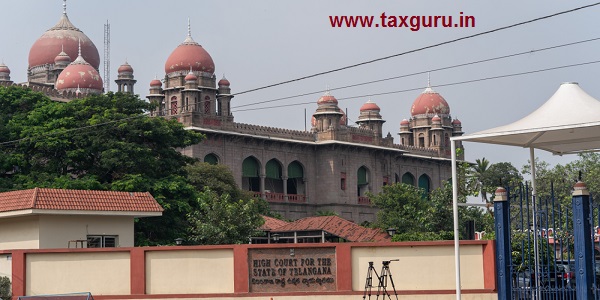
Access significant and up-to-date high court judgments for legal insights and precedent. Stay informed about the latest legal decisions and their impact on various areas of law.
Goods and Services Tax : The Andhra Pradesh High Court held that refund arising from an unconstitutional GST levy carries a constitutional right to interes...
Corporate Law : The Allahabad High Court observed that criminal case delays are caused not only by judicial officers but also by inadequate infras...
Corporate Law : The Delhi High Court quashed a POCSO FIR after noting that the relationship was consensual and the parties were married with a chi...
Goods and Services Tax : You Already Filed One Refund Application… So You Cannot File Another?” Bombay High Court Says GST Law Does Not Work That Way S...
Corporate Law : The article questions why West Uttar Pradesh has been denied a High Court Bench despite contributing the majority of pending cases...
Corporate Law : Supreme Court ruled that CoC and RP can surrender financially burdensome assets voluntarily, clarifying moratorium under section 1...
Income Tax : Gujarat HC has directed CBDT to ensure that there is a mandatory one-month gap between date for furnishing tax audit reports (unde...
Income Tax : Rajasthan High Court granted a one-month extension for filing TARs under Section 44AB for AY 2025-26, citing delayed audit utility...
Income Tax : The Gujarat High Court is hearing a petition from the Chartered Accountants Association regarding persistent glitches on the new I...
Corporate Law : SC clarifies limits of High Court's writ powers in IBC cases and recognises Indian CIRP as foreign main proceeding in cross-border...
Goods and Services Tax : Bombay High Court held that GST registration cannot be cancelled without proper hearing and a reasoned order. The Court quashed th...
Income Tax : Bombay High Court held that delay in filing Form No. 10 for claiming accumulation under Section 11(2) should be condoned where gen...
Goods and Services Tax : Karnataka High Court held that consolidated show cause notices under Sections 73 and 74 of the CGST Act can legally cover multiple...
Income Tax : The Delhi High Court held that additional documents already referred to in a criminal complaint can be filed later under Section 3...
Income Tax : The Delhi High Court held that shareholders of a foreign company cannot be taxed on the company’s rental income and capital gain...
Income Tax : The Court held that membership cannot be granted where the underlying flats do not exist and are merely refuge areas. It ruled tha...
Corporate Law : Bombay High Court implements "Rules for Video Conferencing 2022" for all courts in Maharashtra, Goa, and union territories, effect...
Income Tax : CBDT raises monetary limits for tax appeals: Rs. 60 lakh for ITAT, Rs. 2 crore for High Court, and Rs. 5 crore for Supreme Court, ...
Corporate Law : The Delhi High Court mandates new video conferencing protocols to enhance transparency and accessibility in court proceedings. Rea...
Income Tax : Income Tax Department Issues Instructions for Assessing Officers after Adverse Observations of Hon. Allahabad High Court in in Civ...
The High Court held that inability to trace proof of dispatch of hearing notices does not automatically establish denial of personal hearing, especially in ITC fraud cases.
The court found a prima facie overlap between excess ITC due to non-reconciliation and ITC disallowed under Section 16(4), directing partial pre-deposit and fresh adjudication.
The High Court found prima facie overlap between two assessment proceedings for the same tax period. The demand was remitted for fresh consideration after allowing the taxpayer to file a reply.
The Bombay High Court set aside GST orders as they were based solely on Rule 96(10), which was omitted without a saving clause, and remanded no further action under that rule.
The Court restored GST registration after accepting that non-filing of returns for six months was caused by genuine illness and financial constraints. Restoration was granted subject to strict compliance conditions.
The Delhi High Court upheld exclusion of multiple comparables after finding them functionally different from a low-risk investment advisory service provider. It held that such findings were factual and did not raise any substantial question of law.
The court held that an appeal filed beyond the maximum condonable period under GST law cannot be entertained, and writ jurisdiction cannot be used to override statutory timelines.
The court refused to grant a mandatory stay on income tax demand where the taxpayer had earlier proposed paying dues in instalments. The ruling underscores that voluntary payment proposals can weaken claims for interim protection.
The Court held that customs officials acting in their official capacity cannot be cross-examined as a matter of right. Cross-examination is permissible only where specific prejudice is shown.
The High Court held that notices issued under Section 148 by a jurisdictional Assessing Officer were without authority when the faceless assessment scheme applied. Relying on binding precedents, the writ petition was disposed of in favour of the taxpayer, reaffirming NFAC’s exclusive role.