Income Tax : ITAT Mumbai held that an addition under Section 69A cannot be sustained when the assessee is denied the opportunity to cross-exami...
Income Tax : ITAT held that additions based solely on third-party search material without independent evidence or cross-examination are invalid...
Income Tax : A large spousal gift exemption was denied due to failure in proving genuineness, creditworthiness, and source of funds. The ruling...
Income Tax : ITAT held spousal gift taxable under Section 68 due to lack of evidence on genuineness, bank trail, and donor capacity despite Sec...
Income Tax : This covers how unexplained credits and investments are taxed under Sections 68 to 69D. The key takeaway is that additions require...
Income Tax : The ITAT Amritsar held that a valuation report by itself cannot justify addition under Section 69 without evidence of extra paymen...
Income Tax : The ITAT held that stamp duty valuation could not be blindly adopted where the property was affected by BBMP demolition proceeding...
Income Tax : The Tribunal held that agricultural land situated beyond notified municipal limits is not a capital asset under the Income Tax Act...
Income Tax : ITAT Ahmedabad held that no unexplained investment addition could survive where the booked property deal was cancelled and funds w...
Income Tax : ITAT Delhi held that penalty under Section 271AAC cannot survive once the underlying Section 153C assessment is quashed. The Tribu...
The Tribunal ruled that the PCIT lacked jurisdiction to revise an assessment when the very issue was already under challenge before the appellate authority. Parallel revision proceedings were held to be impermissible.
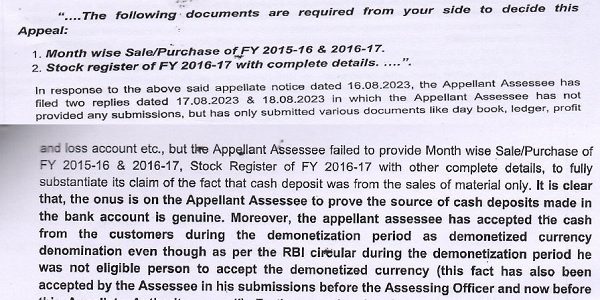
Cash deposits during demonetisation were held to be business receipts already recorded as sales in audited books. The tribunal ruled that taxing the same receipts again under Section 68 amounts to double taxation.
This covers how unexplained credits and investments are taxed under Sections 68 to 69D. The key takeaway is that additions require clear evidence and cannot rest on assumptions.
ITAT Chennai held that reassessment notice under section 148 of the Income Tax Act issued with approval of the Member of CBDT instead of Pr. CCIT is void and invalid. Accordingly, order passed under section 147 is without legal standing and hence quashed.
The Tribunal examined demonetisation-period cash deposits and held that prior cash withdrawals supported by bank records could not be disregarded. The ruling clarifies that additions cannot rest on assumptions about personal conduct.
The Tribunal held that once business receipts are taxed on an estimated basis, separate additions for payments and assets from the same receipts are impermissible. Only a net-profit estimation was sustained, deleting multiple cascading additions.
The tribunal accepted that allotment confers enforceable capital rights capable of transfer. The ruling clarifies that proceeds from such transfers must be assessed under capital gains, not deemed income.
The dispute involved taxing unexplained increases in partners capital in the firms assessment. The Tribunal affirmed that such additions, if any, can only be examined in the hands of partners and not the partnership firm.
ITAT Hyderabad held that limitation for issuing notice under section 148 of the Income Tax Act would be only 3 years from the end of the assessment year since material suggesting escapement is less than Rs. 50 Lakhs. Hence, notice issued u/s. 148 is beyond period of limitation of three years hence quashed.
The issue was whether cash deposited during demonetisation could be taxed as unexplained money. The Tribunal held that prior withdrawals from the bank sufficiently explained the deposits, warranting deletion of the addition.