Income Tax : ITAT Mumbai held that an addition under Section 69A cannot be sustained when the assessee is denied the opportunity to cross-exami...
Income Tax : ITAT held that additions based solely on third-party search material without independent evidence or cross-examination are invalid...
Income Tax : A large spousal gift exemption was denied due to failure in proving genuineness, creditworthiness, and source of funds. The ruling...
Income Tax : ITAT held spousal gift taxable under Section 68 due to lack of evidence on genuineness, bank trail, and donor capacity despite Sec...
Income Tax : This covers how unexplained credits and investments are taxed under Sections 68 to 69D. The key takeaway is that additions require...
Income Tax : The ITAT Amritsar held that a valuation report by itself cannot justify addition under Section 69 without evidence of extra paymen...
Income Tax : The ITAT held that stamp duty valuation could not be blindly adopted where the property was affected by BBMP demolition proceeding...
Income Tax : The Tribunal held that agricultural land situated beyond notified municipal limits is not a capital asset under the Income Tax Act...
Income Tax : ITAT Ahmedabad held that no unexplained investment addition could survive where the booked property deal was cancelled and funds w...
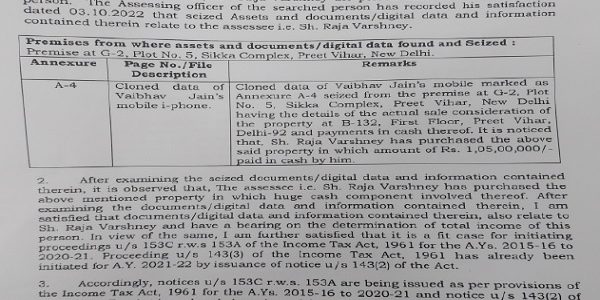
Income Tax : ITAT Delhi held that penalty under Section 271AAC cannot survive once the underlying Section 153C assessment is quashed. The Tribu...
The tribunal held that cash deposits were largely explained through earlier withdrawals and business receipts. Only an estimated 10% addition was sustained, and harsh taxation under section 115BBE was ruled out.
Where updated cash books explained the cash found and no defects were pointed out, additions under section 69A were held unsustainable. Substantiation with regular books prevailed over search-time snapshots.
The Assessing Officer treated all cash deposits as unexplained income under Section 115BBE. The Tribunal held that deposits prima facie represented IOC sales and required factual verification before any addition.
The Tribunal held that remanding an assessment under the amended section 251(1)(a) is legally valid. The key takeaway is that appellate remand powers now have clear statutory backing.
The Tribunal held that cash deposits could not be fully treated as undisclosed when income was declared under section 44AD. The key takeaway is acceptance of presumptive business income.
Sales already offered to tax cannot be added again under section 68. With stock movement evidenced and books not rejected, treating recorded turnover as unexplained cash credit was held unsustainable.
The Tribunal held that estimating profit at 20% of turnover in a milk trading business was arbitrary and unsupported by industry realities. It restricted the gross profit rate to 5%, recognising wastage, spoilage, and thin margins typical to the trade.
The Tribunal held that remanding an assessment under the amended section 251(1)(a) is legally valid. The key takeaway is that appellate remand powers now have clear statutory backing.
The Tribunal ruled that when purchases are disallowed as non-genuine without questioning the source of payment, section 69C cannot be invoked. A plausible disallowance under section 37(1) cannot be revised under section 263 merely to change the charging provision.
ITAT Chennai held that section 197(b) of the Finance Act, 2016 cannot be invoked since Form 2 as contemplated under Income Declaration Scheme not served. Accordingly, addition u/s. 69A made in assessment u/s. 147 r.w.s. 144 liable to be deleted.