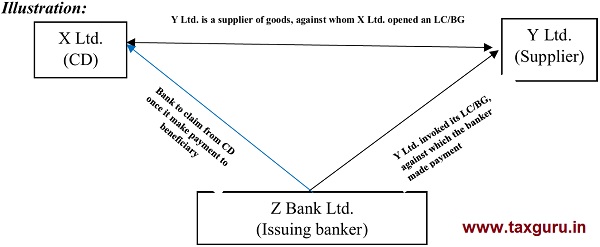
Corporate Law : The Supreme Court held that liabilities arising from corporate guarantees qualify as financial debt under Section 5(8) of the Inso...
Corporate Law : The Supreme Court ruled that a shortfall payment clause in a Deed of Hypothecation can qualify as a contract of guarantee under th...
Corporate Law : The article examines how conflicting Supreme Court judgments in Rainbow Papers and Raman Ispat created uncertainty regarding the s...
Corporate Law : The IBC (Amendment) Act, 2026 introduces CIIRP as a faster and proactive insolvency mechanism for early-stage financial stress. Th...
Corporate Law : Explains how the Court held that insolvency proceedings cannot be used as a pressure tactic for debt recovery. Even if default is ...
Corporate Law : The Supreme Court upheld joint insolvency proceedings against two interconnected real estate companies due to common management an...
Corporate Law : 2026 Guidelines streamline selection of Insolvency Professionals for IRP, RP, Liquidator, and Bankruptcy Trustee roles, ensuring t...
Corporate Law : The amendments replace the consultation committee with CoC oversight, giving creditors greater control over liquidation decisions....
Corporate Law : The proposal focuses on enabling creditors to initiate resolution while retaining debtor management under supervision. It sets out...
Corporate Law : The amendments arise from the inclusion of a unified “service provider” definition under the Code. The move expands regulatory...
Corporate Law : NCLT Indore held that dissolution under Section 54 of the IBC was justified after all assets of the corporate debtor were liquidat...
Corporate Law : NCLT Mumbai held that ongoing One-Time Settlement discussions cannot defeat insolvency proceedings when debt and default are admit...
Corporate Law : NCLAT held that foreign oil and gas assets owned through Videocon subsidiaries could not be included in the CIRP of Videocon Indus...
Corporate Law : Tribunal noted that the CIRP period, including all extensions, had reached 741 days and expired on 20 November 2025. Since no plan...
Corporate Law : The NCLT Mumbai held that liquidation became mandatory under Section 33(2) of the IBC after the Committee of Creditors rejected al...
Corporate Law : The amendment bars related parties, recent auditors, and connected persons from acting as registered valuers in pre-pack insolvenc...
Corporate Law : The IBBI amended the Liquidation Process Regulations, 2016 to allow appointment of one registered valuer for each asset class in M...
Corporate Law : The IBBI amended the CIRP Regulations, 2016 to permit appointment of one set of registered valuers for MSME corporate debtors. The...
Corporate Law : The IBBI Amendment Regulations, 2026 introduce nominee directors on IPA governing boards and strengthen oversight mechanisms. The ...
Corporate Law : The order highlights that delayed applications, late progress reports, and non-compliance with filing requirements amounted to ser...
Amendments to Insolvency and Bankruptcy Board of India (Insolvency Resolution Process for Corporate Persons) Regulations, 2016, and Insolvency and Bankruptcy Board of India (Insolvency Professionals), Regulations 2016. The Insolvency and Bankruptcy Board India (IBBI) notified the following regulations on 13th September 2022: a) Insolvency and Bankruptcy Board of India (Insolvency Resolution Process for Corporate Persons) […]
These regulations may be called the Insolvency and Bankruptcy Board of India (Insolvency Professionals) (Second Amendment) Regulations, 2022.
It is important to note that the Code does not have any mention about the possibility of awarding success fee to the resolution professional. May be the renumerations during the process are considered as enough for attracting due services on behalf of the resolution professional.
NCLT held that it is the Liquidator who has to take call on what mode of sale is in the best in the interest of maximization of value of assets.
Adjudicating Authority under Rule 43 of NCLT Rules, 2016, can call for any information or evidence as it may consider necessary in its discretion
The concept of time value of money emerges from the concept of opportunity cost. At any given time, one has multiple options by which he can spend his money.
The Resolution Plan of the Successful Resolution Applicant could not be approved as it had breached the waterfall mechanism of payments as given under Section 53 of IBC and selectively favoured certain creditors without according any reason for the same and the Plan ineffectively dealt with the interests of all stakeholders of the Corporate Debtor and was non-compliant of Section 30(2)(e) and Section 30(2)(f) of IBC.
Since remanding of a resolution plan back to Committee of Creditors (COC) on the grounds of the procedural deviations raised by a dissenting minority in class of creditors, would render the CIRP a never ending process and was against the time bound resolution objective of the IBC.
Held that Section 48 of the GVAT Act is not contrary to or inconsistent with Section 53 of the IBC. U/s. 53(1)(b)(ii), the debts owed to a secured creditor, which would include the State under the GVAT Act. Accordingly, the Government can claim first charge over the property of the Corporate Debtor
If suit of Appellant is decreed, the claim being contingent, Appellant shall be entitled to claim from Successful Resolution Applicant