
Courts: Supreme Court of India
Read latest Supreme Court of India judgments and orders on Income Tax, GST, Customs, Company Law and other taxation, corporate and commercial laws.

Acquisition of property with token amount of Rs. 1 compensation was arbitrary & unfair: SC

Reopening Invalid Because No Failure to Disclose Material Facts: SC Upholds HC Ruling
Denial of police recruitment to person acquitted in Heinous Crime justified on Benefit of Doubt: SC
Insurance Society Is ‘State’ as Government Control Is Deep & Pervasive: SC
No Excise Exemption Allowed Due to Sale to Intermediary Instead of Direct Export: SC
Interconnect Service Charges Not Royalty to Non-Resident Telecom Operators: SC
Section 60(4) of Social Security Code putting age limit for adoptive mothers to avail maternity benefit is unconstitutional
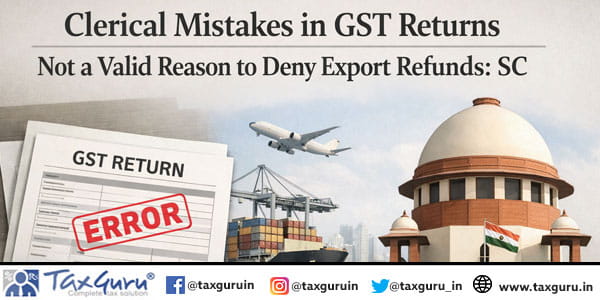
Clerical Mistakes in GST Returns Not a Valid Reason to Deny Export Refunds: SC
Giving Accused Option to Be Searched Before Police Officer Violates Sec 50 NDPS Act: SC
Transfer of funds by Bank without mandate of customer cannot be sustained
Diversion of funds for other than stated purposes is fraud which cannot be cured by shareholder ratification
Legislative Assembly Speaker doesn’t enjoy constitutional immunity from judicial scrutiny under Article 122 and 212
No Special Income Tax Audit Without Hearing: SC Clarifies Section 142(2A) Law
SC Grants Relief in Law Officer Exam as Student Can’t Be Faulted Amid Conflicting Judicial Views
Supreme Court of India brings together Supreme Court judgments and orders published on TaxGuru concerning taxation, corporate, commercial and regulatory laws. The archive covers Income Tax, GST, Customs, Company Law, insolvency, constitutional and other legal issues relevant to taxpayers, businesses and professionals. Readers can research authoritative rulings on statutory interpretation, substantial questions of law, constitutional issues and appeals from High Courts and tribunals. Chartered Accountants, advocates, tax professionals, companies and legal researchers can use this category to follow important Supreme Court jurisprudence relevant to taxation and business laws.

