
#Section 68
Log in to FollowLatest Section 68 updates, provisions, case laws, compliance requirements, tax implications and expert analysis under Income-tax law on TaxGuru.
Income Tax
Income Tax
Petrol Pump Cash Turnover During Demonetisation Cannot Be Ignored: ITAT Dehradun
Income Tax
Income Tax
ITAT Deletes Section 68 Addition as Opening Share Application Money converted in Loans cannot be Taxed as Fresh Credits
Income Tax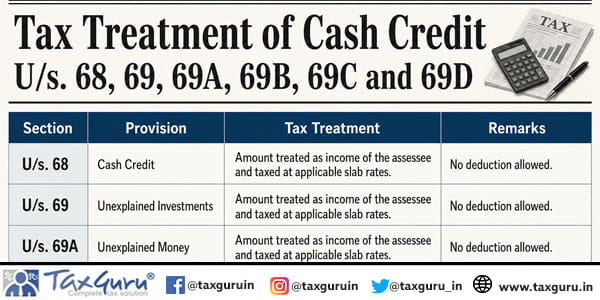
Income Tax
Tax Treatment of Cash Credit U/s. 68, 69, 69A, 69B, 69C and 69D
Income Tax
Income Tax
ITAT Delhi Remands Demonetisation Case as CIT(A) Failed to Pass a Speaking Order
Income Tax
Income Tax
Bangalore ITAT Rules SBN Deposits Received Before 31.12.2016 Are Not Unexplained Cash Credits
Income Tax
Income Tax
No Section 68 Addition for Demonetization Cash Deposits Supported by Recorded Sales: ITAT Delhi
Income Tax
Income Tax
Accepted Contract Receipts, Accepted Purchases: ITAT Deletes Entire Bogus Purchase Addition
Income Tax
Income Tax
Share Premium Can’t Be Taxed U/s 68 Merely Because AO Finds It Excessive: Mumbai ITAT
Income Tax
Income Tax
ITAT Deletes Interest Disallowance as AO Failed to Prove Diversion of Borrowed Funds
Income Tax
Income Tax
ITAT Deletes LTCG Addition as Mere Suspicion Cannot Replace Evidence in Penny Stock Cases
Income Tax
Income Tax
Writ Petition Dismissed as Section 53A cannot Establish Ownership for Depreciation Claim
Income Tax
Income Tax
Mechanical Additions Running Into Crores Cannot Survive Without Proper Verification: ITAT Mumbai
Income Tax
Income Tax
LTCG Exemption Denied as 3072% Returns Failed Human Test Probability
Income Tax
Income Tax
Section 68 Addition Deleted as Revenue Failed to Link Assessee to Penny Stock Scam
Explore the latest Section 68 updates on TaxGuru, including relevant Income-tax Act provisions, rules, notifications, circulars, judicial decisions and compliance guidance. The coverage highlights important tax positions, procedural requirements, assessments, deductions, penalties and litigation developments to help taxpayers and professionals understand the practical implications of changes in income-tax law.

