Income Tax : This guide explains when penalties can be imposed under various provisions of the Income-tax Act, 1961. It also outlines the appli...
Income Tax : This guide explains how unexplained cash credits under Section 68 and related provisions can attract steep taxation under Section ...
Income Tax : The Tribunal held that cash deposits during demonetisation cannot be treated as unexplained when backed by audited books, invoices...
Income Tax : ITAT Bangalore held that profit cannot be estimated arbitrarily when regular books of account are maintained and not rejected unde...
Income Tax : A large spousal gift exemption was denied due to failure in proving genuineness, creditworthiness, and source of funds. The ruling...
Income Tax : ITAT Kolkata deleted the Section 68 addition, holding that share application money already assessed in subscribers' hands cannot b...
Income Tax : Calcutta HC dismissed the Revenue's appeal after the remand report confirmed the disputed receipt was sale proceeds of investments...
Income Tax : ITAT Delhi held Section 68 cannot apply to sale proceeds of disclosed investments already recorded in books. Revenue's appeals wer...
Income Tax : ITAT Delhi held Section 68 inapplicable where shares were disclosed in an earlier year and sale proceeds were already offered as i...
Income Tax : ITAT Agra held Section 44AD could not apply where turnover exceeded the limit, adopted past profit history, allowed telescoping an...
Income Tax : CBDT has instructed tax officers to uniformly apply Sections 68 to 69D and Section 115BBE after a C&AG audit found inconsistencies...
Income Tax : Assessing Officers should follow the sequence as noted below for applying provisions of section 68 of the Act: Step 1: Whether the...
ITAT Bangalore held that the presence of associate or nominal members does not disqualify a co-operative society from claiming deduction under Section 80P(2)(a)(i). The Tribunal relied on the Supreme Court ruling in Mavilayi Service Co-operative Bank Ltd.
ITAT ruled that appellate powers under Section 251 are confined to assessment year under appeal. Directions to reopen completed assessments for another year were held beyond jurisdiction.
Delhi ITAT held that unsecured loans already forfeited and offered to tax in a subsequent assessment year cannot again be taxed under Section 68 in the year of receipt. The Tribunal ruled that such action would result in impermissible double taxation.
Delhi ITAT restored ₹6.30 crore addition under Section 68 after finding that the Mauritius investor’s financial statements were unsigned and unauthenticated. The Tribunal held that incomplete documents cannot establish identity, creditworthiness or genuineness of transactions.
Delhi ITAT held that an Assessing Officer cannot make additions beyond the specific issues remanded by the Principal Commissioner under Section 263. Fresh additions unrelated to the revision directions were therefore rightly deleted.
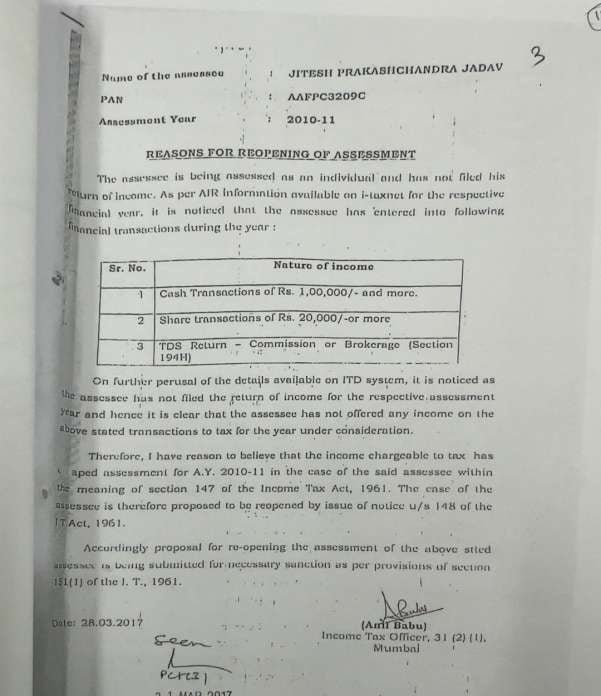
The Delhi ITAT held that large cash deposits and investigation wing information alone do not create valid reason to believe for reopening assessment under Section 147. The Tribunal ruled that reassessment based on suspicion and borrowed satisfaction is invalid in law.
The Kolkata ITAT held that a commercial loan repaid within the same financial year along with interest and TDS compliance could not be treated as a bogus accommodation entry under Section 68. The Tribunal ruled that documentary evidence and banking transactions established the genuineness of the loan.
The Delhi ITAT held that opening balances of unsecured loans cannot be treated as unexplained cash credits under Section 68 when no fresh funds were received during the relevant year. The Tribunal deleted additions after finding that the Assessing Officer wrongly included brought-forward balances.
The Tribunal ruled in favour of the assessee after noting that audited financials, PAN, bank statements, ITRs, confirmations, and MCA records of lenders were furnished. The ruling reinforces that documentary evidence can successfully rebut allegations of bogus loans.
The Tribunal ruled that mere observations about cash transactions are insufficient to levy penalty under Section 271D. A specific finding establishing contravention of Section 269SS is mandatory before imposing penalty.