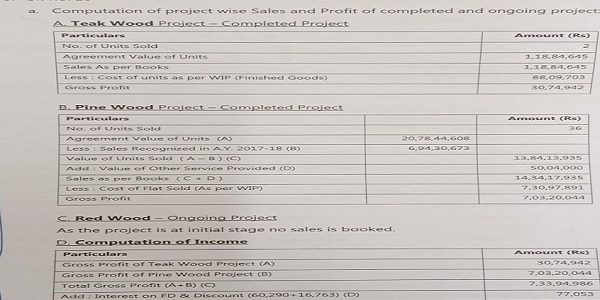
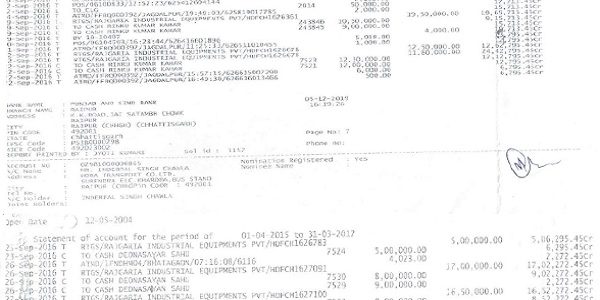
Income Tax : Smt. Ranjana Kumari/Kalta Vs DCIT/ACIT (Central) (ITAT Chandigarh) The appeals involved three assessees belonging to the Kalta Gro...
Income Tax : Understand the statutory time limits for issuing income-tax notices and completing assessments under the Income-tax Act. The guide...
Income Tax : Learn the updated provisions governing rectification, assessments, reassessments, and appeals under the Income-tax Act. This guide...
Income Tax : Learn how different types of income tax assessments are conducted under the Income-tax Act. The FAQs explain assessment procedures...
Income Tax : Section 154 permits rectification of mistakes apparent from the record in assessment orders, intimations, and TDS/TCS processing s...
Income Tax : Delhi ITAT allows Sanco Holding, a Norwegian company, to compute income from bareboat charter of seismic vessels under Article 21(...
Income Tax : It has been observed that in many cases an assessee may wish to make a claim which was not made in the return of income filed unde...
Income Tax : We have attached a file in excel format. The file contains the format of various details which normally assessing officer asks As...
Income Tax : ITAT Delhi held legal services are not FTS under Section 9(1)(vii) and directed partner-wise DTAA examination. FTS addition was de...
Income Tax : ITAT Mumbai deleted a Section 69 addition after finding documentary evidence established joint ownership, source of funds, and ear...
Income Tax : ITAT Mumbai quashed reassessment after finding no Section 143(2) notice and that the AO issued a final order disguised as a draft ...
Income Tax : ITAT Surat held that delayed filing of Form 10B is a procedural lapse and remanded the matter after directing the AO to consider t...
Income Tax : ITAT Delhi held that interest and dividend earned from co-operative banks qualify for deduction under Section 80P(2)(d). Totgar's ...
Income Tax : Instruction No.1/2015 Clarification regarding applicability of section 143(1D) of the Income-tax Act, 1961- Vide Finance Act, 2012...
The ITAT held that mere disclosure of undisclosed income during search is insufficient for immunity under Section 271AAA unless the assessee substantiates the manner in which such income was derived.
The ITAT held that CSR expenditure disallowed as business expenditure under Section 37(1) can still qualify for deduction under Section 80G if statutory conditions are satisfied. Revision under Section 263 was accordingly quashed.
The ITAT ruled that accepted sales necessarily imply corresponding purchases, even if sourced through the grey market. The addition was therefore restricted to estimated profit instead of the full purchase amount.
The Mumbai ITAT held that no separate addition for alleged bogus purchases can be made where the assessee has already disclosed a higher gross profit on disputed transactions. The Tribunal relied on Bombay High Court rulings limiting additions only to differential GP.
The ITAT Delhi held that the upload date of DRP directions on the ITBA portal must be considered for computing limitation under Section 144C(13). Since the final assessment order was passed beyond the prescribed period, the assessment was quashed as time-barred.
ITAT Delhi held that amounts received from encashment of bank guarantees could not be treated as taxable income where the assessee acted only as custodian of government money. The Tribunal followed earlier rulings in the assessee’s own case and dismissed the Revenue’s appeal.
The ITAT Chandigarh held that additions under Section 68 could not be sustained where the Assessing Officer failed to conduct independent inquiry or verification of creditors. The Tribunal deleted additions relating to sundry creditors and business transactions supported by documents and banking records.
Pune ITAT held that interest earned by a co-operative credit society from deposits with co-operative banks qualifies for deduction under Section 80P(2)(d). The Tribunal clarified that the Supreme Court ruling in Totgars does not apply to such claims.
The ITAT Hyderabad held that additions for alleged cash payments cannot be sustained merely on the basis of third-party seized documents. The Tribunal ruled that absence of corroborative evidence, cash trail, or signed records makes such additions legally unsustainable.
The tribunal held that interest cannot be disallowed where advances to related parties are made for business purposes and out of own funds, emphasizing the principle of commercial expediency.