Corporate Law : Explains how recent tribunal decisions shaped the rules for selling corporate debtors as going concerns, highlighting compliance...
Corporate Law : The Tripartite Agreement Trap: When Banks Lose Financial Creditor Status in Real Estate Insolvency This case memo discussed the ru...
Corporate Law : NCLAT holds that time spent in pending Debt Recovery Tribunal proceedings cannot be excluded under Section 14 of the Limitation Ac...
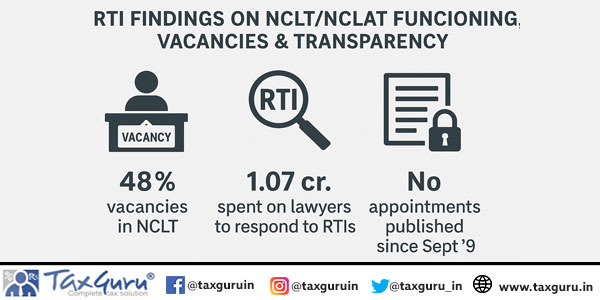
Corporate Law : RTI inquiry into NCLT/NCLAT reveals member vacancies, lack of consolidated case data, and opaque appointments, highlighting need f...
Corporate Law : The NCLAT ruled that provident fund dues are not corporate debtor assets and must be paid in full during CIRP, prioritizing them o...
Corporate Law : The Supreme Court upheld joint insolvency proceedings against two interconnected real estate companies due to common management an...
Corporate Law : From 2022-23 to 2024-25, appeals filed at NCLAT rose steadily, with IBC cases forming the majority, reflecting active engagement i...
Corporate Law : Supreme Court ruled that CoC and RP can surrender financially burdensome assets voluntarily, clarifying moratorium under section 1...
Corporate Law : SC clarifies limits of High Court's writ powers in IBC cases and recognises Indian CIRP as foreign main proceeding in cross-border...
Corporate Law : NCLT & NCLAT eligibility criteria, insolvency rules, and case statistics from 2022-2024. Updates on financial irregularities and r...
Corporate Law : NCLAT held that foreign oil and gas assets owned through Videocon subsidiaries could not be included in the CIRP of Videocon Indus...
Corporate Law : NCLAT held that a joint venture arrangement did not prevent insolvency proceedings where separate agreements clearly imposed suppl...
Company Law : A resolution applicant could not unilaterally alter its financial proposal through a last minute addendum after completion of the ...
Corporate Law : NCLAT held that the Corporate Debtor’s email offering payment subject to acceptance of a consequence sheet amounted to acknowled...
Company Law : The Appellate Tribunal upheld findings that the arrangement allowing the Successful Resolution Applicant to receive 50% of PUFE re...
Corporate Law : IBBI orders disciplinary action against Mr. S Vasudevan for alleged violations in the insolvency process of Mega Foods Products Ma...
Corporate Law : IBBI suspends IP for Failure to act during CIRP despite NCLAT directive and for Delay in convening Committee of Creditors (CoC) me...
Corporate Law : Read about the IBBI's disciplinary action against Mr. Venkata Sivakumar, an Interim Resolution Professional, for sharing asset mem...
Corporate Law : Govt issued a circular detailing vacancies for Judicial & Technical Members posts in NCLAT with detailed guide to apply for these...
Fema / RBI : It is clarified that cases admitted with National Company Law Tribunal (NCLT)/National Company Law Appellate Tribunal (NCLAT) unde...
The above statutory provision makes it clear that in event the Applicant, fails to comply with the second Proviso to modify the application within thirty days from the date of amendment, deeming provision of law shall come into play and the application shall be deemed to have been withdrawn.
The NCLAT Delhi rules on the Puneet Resutra vs. J&K Bank case, clarifying that a one-time settlement with a guarantor does not extinguish the principal borrowers debt. The court upheld the initiation of insolvency proceedings.
NCLAT dismissed Liquidator’s appeal as premature, urging NCLT Ahmedabad to decide pending IAs by the successful auction purchaser without delay.
NCLAT Delhi held that possession of unit by virtue of section 53A of the Transfer of Property Act is not admissible in case the agreement to sell is unregistered. Accordingly, sale consideration paid is directed to be refunded.
NCLAT Delhi held that application for intervention filed under section 59(7) of the Insolvency and Bankruptcy Code, 2016 [IBC] beyond the period of limitation of three years is time barred.
NCLAT Delhi ruled that the forced purchase of minority shares without complying with the Companies Act constitutes oppression and mismanagement. The case highlights the strict legal requirements for such acquisitions.
The NCLAT dismissed an appeal, affirming that writing off a bad debt is a commercial decision by a company’s board that does not warrant judicial intervention.
NCLAT rules that a written financial contract is not essential to prove debt existence under IBC. Oral agreements, supported by financial records, can establish debt and default for CIRP initiation.
NCLAT Delhi held that limitation period u/s. 61(2) of the Insolvency and Bankruptcy Code commences from date of order and not dependent on knowledge of order to ED. Further, once prescribed and condonable periods expires, NCLAT has no jurisdiction to entertain appeal.
NCLAT Delhi held that no new claims including statutory dues can be allowed post approval of resolution plan. Accordingly, the belated claim of GST department rightly dismissed by the adjudicating authority.