
Courts: ITAT Ahmedabad
Find latest ITAT Ahmedabad judgments, orders and case laws on income tax covering assessments, additions, deductions, exemptions, TDS, reassessment and penalties.

BSNL VRS-2019 Compensation Fully Exempt Under Section 10(10B): ITAT Ahmedabad
ITAT Ahmedabad Deletes ₹4.99 Lakh Penalty for Failure to Specify Misreporting Charge
ITAT Ahmedabad Restores ₹12.16 Lakh Section 68 Addition for Fresh Evidence Examination
ITAT Restores ₹34.50 Lakh Section 69A Addition for Fresh CIT(A) Hearing
Section 69 Addition Deleted as Karta Explained HUF Property Funds: ITAT Ahmedabad
Gross Land Sale Receipts Cannot Be Taxed Without Allowing Purchase Cost: ITAT Ahmedabad
Binding Madras HC Order Prevents SBI’s TDS Default on Foreign LFC: ITAT Ahmedabad
Additions Beyond Limited Scrutiny Scope Invalid Without Conversion: ITAT Ahmedabad
Section 271(1)(c) Penalty on Withdrawn Section 35 Donation Deduction Deleted: ITAT Ahmedabad
Senior Citizen’s Explained Cash Deposits Cannot Be Treated Unexplained: ITAT Ahmedabad
0.25% Commission Rate Reasonable on Unexplained Bank Deposits: ITAT Ahmedabad
Unrelated Section 50C Addition Cannot Survive Failed Reopening Ground: ITAT Ahmedabad
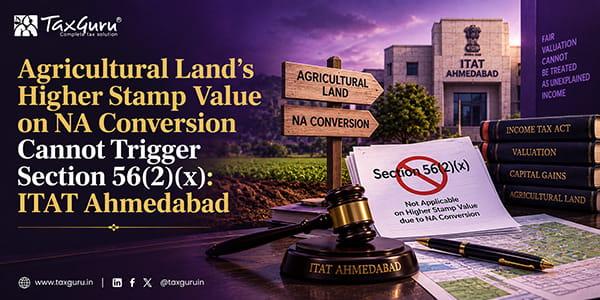
Agricultural Land’s Higher Stamp Value on NA Conversion Cannot Trigger Section 56(2)(x): ITAT Ahmedabad
Bank-Repaid Loan Cannot Be Deemed Accommodation Entry Solely on Third-Party Statement: ITAT Ahmedabad
ITAT Ahmedabad judgments and orders provide an extensive source of appellate case law under the Income-tax Act. This page compiles ITAT Ahmedabad decisions dealing with assessments, additions, deductions, exemptions, business income, capital gains, unexplained income, reassessment, TDS, transfer pricing, penalties and procedural issues. Taxpayers, businesses, Chartered Accountants, advocates and tax professionals can use this dedicated page to research Tribunal precedents relevant to income-tax controversies. TaxGuru brings together recent and important earlier ITAT Ahmedabad case laws, making it easier to follow developments in direct tax jurisprudence and identify decisions relevant to assessments and appeals.

