
Courts: ITAT Ahmedabad
Find latest ITAT Ahmedabad judgments, orders and case laws on income tax covering assessments, additions, deductions, exemptions, TDS, reassessment and penalties.

Sale Price Is Not Capital Gain: ITAT Restores ₹2.10-Crore Addition & ₹69.45-Lakh Penalty
Revenue’s 15-Ground Appeal Fails as ITAT Upholds Consistency on Tax and Transfer Pricing Issues
Withdrawn Donation Claim Cannot Justify 200% Penalty u/s 270A: ITAT Ahmedabad
Reopening on “Cash Loan”, Addition for “Bogus LTCG” – Ahmedabad ITAT Quashes Reassessment U/s 147
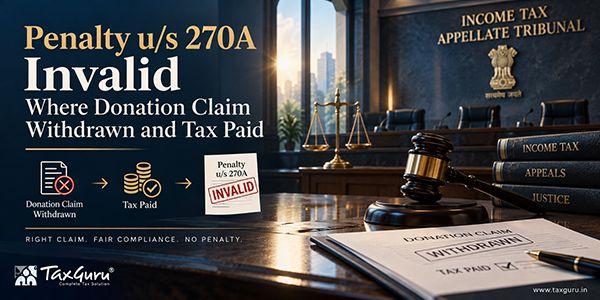
Penalty u/s 270A Invalid Where Donation Claim Withdrawn and Tax Paid
ITAT Ahmedabad Upholds Rejection of Books and 10% Profit Estimation for Builder
ITAT Ahmedabad Deletes Section 68 Additions on Loan and Opening Creditor Balance
ITAT Upholds Consumer Electricity Rate for Section 80IA Captive Power Valuation
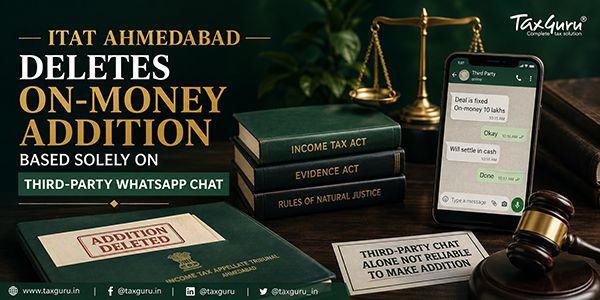
ITAT Ahmedabad Deletes On-Money Addition Based Solely on Third-Party WhatsApp Chat
ITAT Ahmedabad Allows Section 80P(2)(d) Deduction on Co-operative Bank Interest
₹2.15-Crore 69A Addition Restored; Ahmedabad ITAT Deletes 271AAC, Upholds ₹20,000 272A Penalty
Ahmedabad ITAT Condoned 1,876-Day Delay in ₹2.01-Crore Exemption Claim
Rule 46A: ₹1.01 Crore u/s 69A Addition Restored to AO for Fresh Examination
ITAT Ahmedabad Allows BSNL VRS Exemption Claim Raised First Time in Appeal
ITAT Ahmedabad judgments and orders provide an extensive source of appellate case law under the Income-tax Act. This page compiles ITAT Ahmedabad decisions dealing with assessments, additions, deductions, exemptions, business income, capital gains, unexplained income, reassessment, TDS, transfer pricing, penalties and procedural issues. Taxpayers, businesses, Chartered Accountants, advocates and tax professionals can use this dedicated page to research Tribunal precedents relevant to income-tax controversies. TaxGuru brings together recent and important earlier ITAT Ahmedabad case laws, making it easier to follow developments in direct tax jurisprudence and identify decisions relevant to assessments and appeals.

