
Courts: ITAT Delhi
Find latest ITAT Delhi judgments, orders and case laws on income tax covering assessments, transfer pricing, international taxation, deductions, TDS, reassessment and penalties.
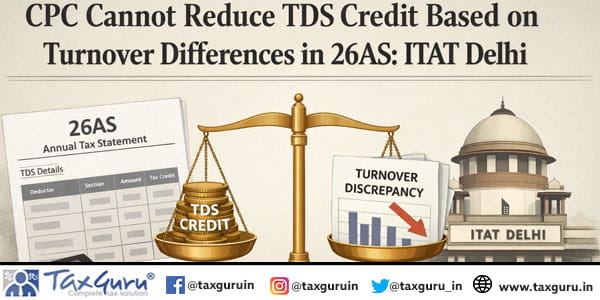
CPC Cannot Reduce TDS Credit Based on Turnover Differences in 26AS: ITAT Delhi

Assessment order void as approval u/s. 153D granted in mechanical manner without application of mind
AMP expense incurred exclusively for business is revenue expenditure: ITAT Delhi
ITAT Delhi Reduces Cash Deposit Addition to 5% Due to Lack of Evidence by AO
Section 54 Exemption Allowed Without Registration Due to Possession & Payment
Section 54 Deduction Allowed for Multiple Floors Due to Single Residential House Interpretation
Restriction to ₹3L Invalid After CBDT Raised Leave Encashment Limit to ₹25 Lakh
Settlement of Arbitration Award on Corporate Guarantee Deductible Under Section 37(1)
Addition Under Section 40A(2)(a) Deleted Due to Incorrect Comparison of Services
Huntsman Investment [Netherlands] BV: When Does a Buy-Back Become a Corporate Reorganisation
Section 14A Cannot Apply When No Exempt Income Exists: ITAT Delhi
Stock Derivatives Are Not ‘Shares’: ITAT Delhi Rules on India-Mauritius Tax Treaty
ITAT Deletes Addition as Income Was Disclosed Despite Wrong Schedule Entry
Section 68 Addition Upheld for Failure to Prove Genuineness of Advance: ITAT Delhi
ITAT Delhi judgments and orders constitute a substantial body of appellate case law under the Income-tax Act. This page compiles ITAT Delhi decisions concerning assessments, additions, deductions, exemptions, business income, capital gains, transfer pricing, international taxation, TDS, reassessment, unexplained income, penalties, limitation and procedural disputes. Companies, individuals, Chartered Accountants, advocates and tax professionals can use this collection to research Tribunal precedents relevant to income-tax matters. TaxGuru brings together recent and significant earlier ITAT Delhi judgments and orders, providing a convenient resource for following developments in direct tax jurisprudence and researching recurring issues arising in assessments and appeals.

