

Articles by this Author
Income Tax
Income Tax
Allahabad HC Sets Aside Section 69A Addition Based on Transactions of Wrong Financial Year
Income Tax
Income Tax
20% Tax Demand Deposit Not Automatic Ground to Reject Stay Application: Allahabad HC
Income Tax
Income Tax
Section 54F Claim Can Be Raised Before ITAT Even If Not Claimed in Return: ITAT Hyderabad
Income Tax
Income Tax
PCIT Cannot Mechanically Reject Delayed Revised ITR Refund Claim: Punjab & Haryana HC
Income Tax
Income Tax
Wrong Section 151 Authority Approval Invalidates Reassessment Notice: Bombay HC
Income Tax
Income Tax
Bogus Purchase Addition Deleted as Sales and Books Accepted: Calcutta HC
Income Tax
Income Tax
Faceless Assessment Quashed for Ignoring Adjournment Request: Bombay HC
Income Tax
Income Tax
₹308 Cr Tax Demand Stayed as Import Addition Breached Natural Justice: Bombay HC
Income Tax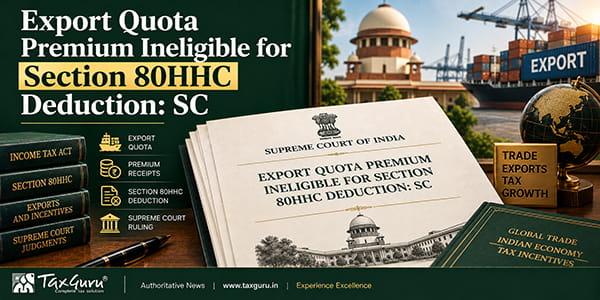
Income Tax
Export Quota Premium Ineligible for Section 80HHC Deduction: SC
Income Tax
Income Tax
Calcutta HC Sustains Deletion of Section 69 Addition for Explained Disclosed Investments
Income Tax
Income Tax
Section 43CA Inapplicable to Transfer of TDRs as Intangible Rights: ITAT Nagpur
Income Tax
Income Tax
ITAT Nagpur Upholds Section 69A Addition on Unsubstantiated Demonetisation Cash Deposits
Income Tax
Income Tax
8% Income Estimation on Unproved Commission Business Upheld: ITAT Nagpur
Income Tax
Income Tax

