

Articles by this Author
Income Tax
Income Tax
Section 68 Addition on Anonymous Donations Set Aside by Visakhapatnam ITAT
Income Tax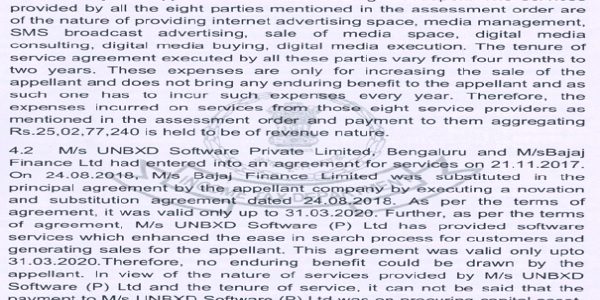
Income Tax
Digital Advertising and SEO Expenses Allowed as Revenue Expenditure: Pune ITAT
Income Tax
Income Tax
Wife’s Jewellery Not Taxable in Husband’s Hands; 115BBE Rate Prospective: ITAT Nagpur
Income Tax
Income Tax
ITAT Nagpur Denies Section 80-IA Deduction for Failure to Prove Developer Status
Income Tax
Income Tax
Bombay HC: Bogus Purchases Alone Cannot Trigger Section 69C; ₹104.99 Crore Addition Deleted
Income Tax
Income Tax
ITAT Delhi: Foreign Life Policy Not Undisclosed Asset; Maturity Proceeds Exempt
Income Tax
Income Tax
SC: AWS Cloud Receipts Not Royalty or FTS/FIS
Income Tax
Income Tax
SC Declines Interference With Penalty Deletion Over Ambiguous Section 271(1)(c) Notice
Income Tax
Income Tax
SC: DVO Reference Valid After Rejection of Books of Account
Income Tax
Income Tax
Section 263 Not Invocable for Non-Initiation of Section 270A Penalty: ITAT Ahmedabad
Income Tax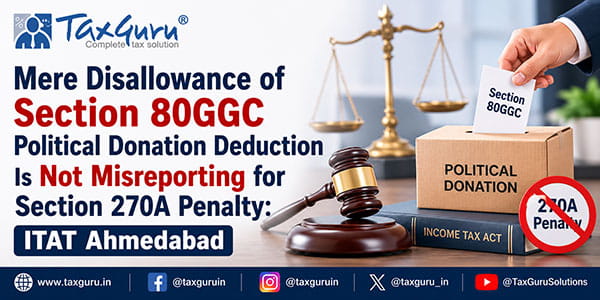
Income Tax
Mere Disallowance of Section 80GGC Political Donation Deduction Is Not Misreporting for Section 270A Penalty: ITAT Ahmedabad
Income Tax
Income Tax
TDS Credit Allowed in Year Income Is Taxable Despite Later Reflection in Form 26AS: ITAT Jaipur
Income Tax
Income Tax
Section 206AA Cannot Apply Where Section 194-IA Is Inapplicable to Agricultural Land: ITAT Surat
Income Tax
Income Tax

