Income Tax : Explains when food and hospitality expenses qualify as business deductions and outlines the tests under Section 37(1) to distingui...
Income Tax : Explains how Section 37(1) restricts deductions to expenses exclusively for business and highlights gray-area items like home offi...
Income Tax : ITAT Ahmedabad held settlement payments in foreign civil cases are deductible under Section 37(1) as compensatory, not penal, and ...
Income Tax : Summary of Section 37(1) IT Act for business expenditure deduction. Covers "wholly and exclusively" test, commercial expediency, ...
Income Tax : Examines the tax implications of employer-funded education, covering employer deductions and employee taxation. Includes analysis ...
Income Tax : Interest income earned by a foreign bank from foreign currency loans extended to Indian corporates was taxable on a gross basis. S...
Income Tax : ITAT Jodhpur held that Section 37(1) business expenses cannot be disallowed without specific findings on genuineness. All appeals ...
Income Tax : ITAT Mumbai held that an accrued business liability supported by evidence is deductible under Section 37(1) despite future payment...
Income Tax : ITAT Mumbai held that eligible CSR donations qualify for Section 80G deduction if statutory conditions are met, despite disallowan...
Income Tax : ITAT held that increased employee remuneration cannot be disallowed merely because business revenue declined where the expenditure...
The Court held that interest paid for delayed Agricultural Income Tax cannot be deducted under Section 37. Since AIT itself is not deductible, the related interest also fails eligibility. The ruling confirms that such payments do not qualify as business expenditure.
Explains how Section 37(1) restricts deductions to expenses exclusively for business and highlights gray-area items like home office use, meals, vehicles, and cash payments. Key takeaway: only well-documented, business-purpose expenses survive scrutiny.
ITAT Mumbai confirmed all expense disallowances and additions for unexplained share capital, premium, and warrants. The assessee failed to prove genuineness or creditworthiness, and identity alone was insufficient under section 68.
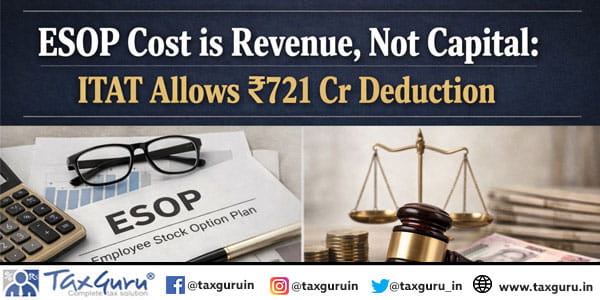
The Tribunal held that past years consistently allowed ESOP expenditure as revenue, and no new facts justified deviation. once an issue is settled for identical facts, consistency must be maintained.
The Tribunal held that the payment to the labour union was backed by a formal settlement under the Industrial Disputes Act involving 26 workers. It ruled that the assessee demonstrated clear business nexus and commercial expediency in resolving labour unrest. The disallowance under Section 37(1) was therefore deleted.
The AO’s assessment included detailed examination of depreciation, warranty provisions, and Section 80G deductions for CSR donations. ITAT Ahmedabad found that the AO’s conclusions were plausible and in line with judicial precedents. The revisionary order under Section 263 was quashed, affirming that the AO’s order was not erroneous or prejudicial to Revenue.
The Tribunal examined alleged bogus payments to 27 sub-contractors treated as undisclosed income. While the Assessing Officer made large additions, the assessee provided affidavits confirming genuineness. The ruling partly allowed the appeals, stressing careful verification of evidence rather than assumptions.
The tribunal held that the State Electricity Board consumer tariff of ₹6.62/unit was the valid internal CUP for captive power transfer. Rejecting comparisons with generating companies, it ruled that no downward adjustment was required. The key takeaway is that actual SEB purchase rates can reliably determine market value for 80IA claims.
The ITAT Delhi upheld the allowance of management fees after verifying proper documentation and business purpose, emphasizing that payments to a parent company are deductible if fully supported.
ITAT Mumbai held that the Assessing Officer made detailed enquiries before allowing ESOP expenditure, invalidating the PCIT’s revision under section 263.