Income Tax : This guide explains the penalty and prosecution framework under the Income-tax Act for AY 2026-27. It highlights the consequences ...
Income Tax : The article explains how offences such as wilful tax evasion, failure to file returns, non-payment of TDS/TCS, falsification of re...
Income Tax : This article outlines major offences under the Income-tax Act that may result in prosecution, including tax evasion, non-payment o...
Income Tax : This article explains the statutory powers of the Principal Commissioner or Commissioner to waive or reduce penalties in genuine c...
Income Tax : This article outlines major penalties under the Income-tax Act for defaults involving tax payments, return filing, TDS compliance,...
Income Tax : ITAT held that penalty under Section 271D is invalid where the Assessing Officer failed to record satisfaction in the assessment o...
Income Tax : ITAT held that penalty under Section 271D cannot survive where the Assessing Officer failed to record satisfaction in the assessme...
Income Tax : Gujarat High Court upheld deletion of the Section 271D penalty, holding that absence of recorded satisfaction in the assessment or...
Income Tax : ITAT Surat held that absence of satisfaction in the assessment order invalidated the Section 271D penalty, following the Supreme C...
Income Tax : The ITAT held that penalty under Section 271DA cannot be sustained where the Assessing Officer failed to record a clear and consci...
Income Tax : It is a settled position that period of limitation of penalty proceedings under section 271D and 271E of the Act is governed by th...
Income Tax : It has been brought to notice of CBDT that there are conflicting interpretations of various High Courts on the issue whether the l...
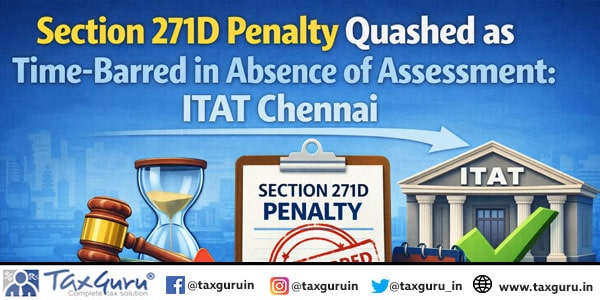
Applying settled law, the Tribunal held that penalties imposed after expiry of the limitation period are void. Both loan and repayment penalties were deleted across multiple years.
The issue was whether additions can rest on seized loose sheets termed as dumb documents. The Tribunal upheld Section 69C additions, holding that seized material supported by statements is valid evidence.
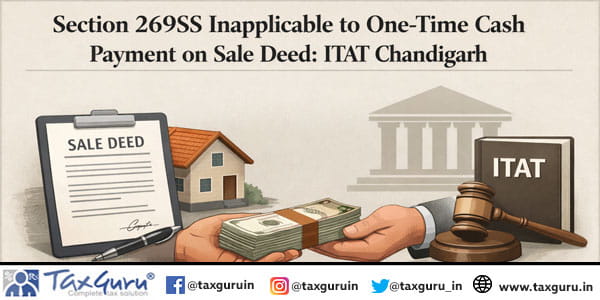
The ruling clarifies that specified sum under section 269SS refers to advances linked to property transfers. Cash received as final consideration at registration cannot trigger penalty under section 271D.
ITAT Pune struck down a ₹34.28 lakh penalty issued after the company had merged, citing substantive illegality. Penalty orders must be issued in the name of a legally existing entity.
The issue was whether penalties under sections 271D and 271E apply to cash dealings of a credit society with its members. ITAT held that genuine, audited member transactions supported by reasonable cause are protected under section 273B.
The ITAT held that a penalty under Section 271D cannot survive without recorded satisfaction by the Assessing Officer during pending assessment proceedings.
The Tribunal held that penalties under Section 271D were invalid as they were imposed beyond the limitation period prescribed under Section 275(1)(c).
The Tribunal held that once cash received was accepted in assessment without any addition, penalty for alleged violation of Section 269SS could not be sustained.
Upholding the appellate authority, the Tribunal confirmed that jurisdiction cannot be assumed casually against a non-searched person. Statutory satisfaction requirements are mandatory, not procedural.
ITAT Jaipur held that penalty orders under section 271D and 271E of the Income Tax Act passed beyond 6 months from end of the month in which assessments were completed is barred by limitation. Accordingly, appeal of revenue stands dismissed.