Income Tax : The article explains remedies available after adverse tax orders under scrutiny and reassessment. The key takeaway is that choosin...
Income Tax : The Court clarified that mere pendency of information exchange requests under DTAA cannot justify continuing a Look Out Circular. ...
Income Tax : A surge in Section 143(2) notices was triggered by the June 2025 limitation deadline. This explains why cases were picked and how ...
Income Tax : The Tribunal ruled that penalty under Section 271A cannot be levied merely because books were rejected and income was estimated. S...
Income Tax : The ITAT held that an assessment completed before receiving the DVO report under section 50C(2) is invalid. All additions and disa...
Income Tax : Delhi ITAT allows Sanco Holding, a Norwegian company, to compute income from bareboat charter of seismic vessels under Article 21(...
Income Tax : It has been observed that in many cases an assessee may wish to make a claim which was not made in the return of income filed unde...
Income Tax : We have attached a file in excel format. The file contains the format of various details which normally assessing officer asks As...
Income Tax : Tribunal observed that the Assessing Officer failed to establish any mismatch in stock, sales, or accounting records before making...
Income Tax : ITAT Hyderabad held that constituent members of a JV or Consortium can claim deduction under Section 80IA(4) when they actually ex...
Income Tax : The Tribunal found that full payment, TDS deduction, and transfer of possession established completion of the transaction for capi...
Income Tax : ITAT Rajkot held that cash deposits made during demonetization were fully supported by audited books of account, cash books, and b...
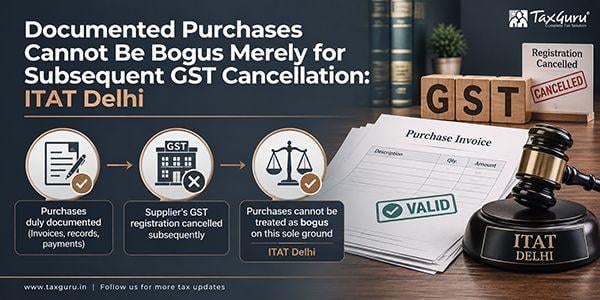
Income Tax : The Hyderabad ITAT held that purchases cannot be treated as bogus merely because the supplier failed to respond to a notice under ...
Income Tax : Instruction No.1/2015 Clarification regarding applicability of section 143(1D) of the Income-tax Act, 1961- Vide Finance Act, 2012...
The tribunal reversed the CIT(A)’s decision for wrongly quashing assessment due to lack of notice under Section 143(2). It held that Section 263 proceedings are a continuation of original assessment.
The Tribunal examined whether cash deposits backed by prior withdrawals can be taxed as unexplained income. It ruled that in absence of evidence showing alternative use of cash, the source stands explained.
The issue involved denial of exemption on sale of agricultural land. The Tribunal held that the land met conditions of Section 2(14)(iii), making gains non-taxable. The case examined whether land sale constituted business income. The Tribunal ruled that absence of development or trading intent invalidated such classification.
The court held that revision under section 263 requires independent satisfaction by the PCIT. Acting merely on the Assessing Officer’s view renders the revision order invalid.
The issue was whether high-turnover companies can be compared with a smaller software service provider. The Tribunal held that companies with disproportionately large turnover must be excluded as they distort comparability due to scale advantages.
The issue involved denial of LTCG exemption based on allegations of penny stock manipulation. The Tribunal held that without direct evidence or nexus, such additions cannot be sustained.
The Court held that reassessment based solely on an audit objection is invalid as it constitutes a change of opinion. It emphasized that previously examined issues cannot be reopened without new tangible material. The ruling reinforces limits on reassessment powers.
ITAT ruled that deduction under Section 54F can be raised during reassessment if it relates to the income under scrutiny. The case clarifies that reassessment scope includes such connected claims.
The Tribunal held that LTCG cannot be treated as bogus merely based on investigation reports. It ruled that documented transactions through banking and stock exchange channels prove genuineness.
The tribunal held that capital gains from share buyback are not taxable in India under treaty provisions. It clarified that such transactions qualify as corporate reorganisation. The key takeaway is that DTAA benefits override domestic tax provisions when more beneficial.