Corporate Law : India’s Social Security Code consolidates multiple labour welfare laws into a unified framework covering organised, unorganised,...
Corporate Law : The Code on Wages and the 2026 Rules introduce a uniform wage definition and cap exclusions at 50% of total remuneration. Employer...
Corporate Law : India’s new Labour Codes introduce a uniform wage definition and 50% cap on exclusions, affecting PF, gratuity, bonus, and salar...
Corporate Law : The paper examines whether recent labour law reforms deliver real gender equality or merely formal compliance. It concludes that d...
Corporate Law : Dhara Verma Abstract The labour welfare laws in India provide essential maternity and paternity benefits to workers which demonstr...
Corporate Law : The ruling clarifies that digital processes are encouraged but not mandatory, ensuring workers rights are protected even through p...
Company Law : The law removes sector-based exclusions and extends minimum wage protection to all employees. It confirms universal coverage acros...
Corporate Law : The FAQs explain the uniform wage definition and the 50% allowance cap across all Codes. Gratuity applies prospectively from 21 No...
Corporate Law : The Code retains trade union rights, collective bargaining, and strike provisions with notice requirements. It confirms continued ...
Corporate Law : Raising factory and licensing thresholds does not remove safety and welfare protections. All establishments with 10 or more worker...
Corporate Law : The Supreme Court held that compensatory allowances form part of “ordinary wages” for overtime calculation. Executive circular...
Corporate Law : The Karnataka High Court has set aside a prosecution order against Natural Remedies Private Limited. The court found that the Comm...
Corporate Law : Punjab & Haryana High Court directs that temporary employees cannot be replaced by another set of temporary staff but can be repla...
Corporate Law : The Telangana High Court addressed jurisdiction and employment status in Godrej Agrovet Ltd. Vs Presiding Officer. Key aspects of ...
Corporate Law : The Bombay High Court sets aside the Industrial Court's interim relief, reinstating employer rights to transfer and discipline emp...
Corporate Law : The Industrial Relations Code (Amendment) Bill, 2026 (Bill No. 33 of 2026), introduced in the Lok Sabha, seeks to amend section 10...
Corporate Law : The government has notified a clear wage ceiling for supervisory roles. Earnings above this limit remove such employees from worke...
Corporate Law : The Government has issued draft Coal Mines Safety Regulations, 2026 under the OSHWC Code, detailing safety standards, certificatio...
Corporate Law : The draft Central Rules lay down detailed procedures to operationalised the Industrial Relations Code, replacing older dispute and...
Corporate Law : The notification introduces draft rules under the OSH Code to unify and modernise labour regulation. The key takeaway is a shift t...
It is impossible to overestimate the significance of international labour norms and law in the modern, globalised world. With the expansion of global trade and business, it is more important than ever to guarantee that employees are safeguarded and treated fairly across international borders.
The right to strike is recognized as a fundamental human right by international labor standards, including the International Labor Organization (ILO) conventions. However, the extent to which this right is protected and regulated varies between countries and is subject to judicial interpretation.
A vital component of business operations, corporate governance is crucial to maintaining compliance with labour laws and regulations. To safeguard the rights of their employees and avoid potential legal repercussions, businesses have a duty to make sure they are adhering to all applicable labour laws and regulations.
Unfair labour practices refer to the practice or treatment of employees by the employer, which violates the protective laws, according to sections 5 to 13 of the National Labour Relations Act.
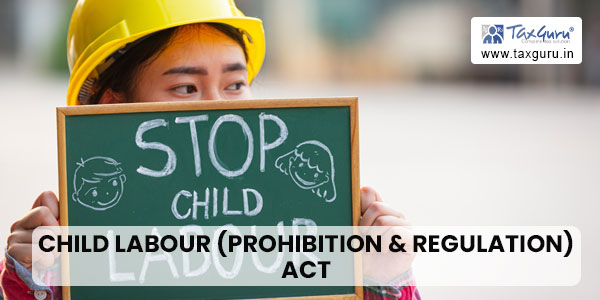
Explore the urgent issue of child labour and its complex relationship with labour laws. Uncover the social, economic, and legal implications, the role of international conventions, and initiatives to combat child labour. Understand the need for a multifaceted approach addressing root causes, awareness campaigns, educational initiatives, rescue and rehabilitation efforts, and the economic empowerment of families.
Navigate the complexities of Indian Labour Laws impacting the BPO-IT/ITES industry. Explore Industrial Relations Code, Trade Unions Act, Code on Wages, Social Security Code, Sexual Harassment Act, and more. Understand the implications on workers and employers. Stay compliant, informed, and ensure a fair workplace.
Explore the intricate link between labour rights and merger & acquisition transactions, emphasizing Sustainable Development Goals (SDGs). Learn about job losses, changes in terms, collective bargaining, and legal implications. Discover the impact on SDG goals like Decent Work, Reduced Inequality, Peace & Justice, and Global Partnerships. Stay informed about the crucial balance between commercial growth and worker protection.
Explore the impact of the COVID-19 pandemic on Indian labour laws and the crucial changes needed in the post-COVID era. Learn about proposed amendments for flexible working hours, social security schemes, protection for gig workers, health and safety regulations, and more. Understand the recent major labour reforms through the Occupational Safety, Health, and Working Conditions Code, Industrial Relations Code, and Code on Social Security. Stay informed about the evolving landscape of labour laws in India.
Gender inequality is a pervasive issue across the world, and India is no exception. Despite significant progress in recent years, women in India continue to face a wide range of challenges in the workforce, including the gender pay gap and limited access to maternity benefits.
Moonlighting is a term that refers to having a second job, typically secretly and at night, in addition to one’s regular employment. Moonlighting can be a way of earning extra income, pursuing a passion, or exploring a new career path. However, it can also pose some challenges and risks for both employees and employers.