
Type: Trending
3,627 articlesIncome Tax
Income Tax
Jaipur ITAT Deletes ₹1.41-Crore Penalty on Search Surrender Under Section 271AAB
Income Tax
Income Tax
Code Name & Contact Number Not Evidence: Jaipur ITAT Deletes ₹4 Lakh Addition
Income Tax
Income Tax
Low Returned Income Cannot Eclipse Audited Financial Capacity: Jaipur ITAT
Income Tax
Income Tax
₹67.40 Crore Preschool Fees: ITAT Restores 12AB Application After Mere 4-Day Opportunity
Corporate Law
Corporate Law
Married Daughters Have Equal Coparcenary Rights in Joint Family Property: Karnataka HC
Income Tax
Income Tax
Cash With Mother and Minor Children Cannot Be Rejected Ignoring Social Realities: ITAT Mumbai
Service Tax
Service Tax
Mere Third-Party Income Tax Data Cannot Justify Extended Limitation: CESTAT Chandigarh
Income Tax
Income Tax
Spiritual and Moral Advancement Is Not Inherently Religious: Delhi ITAT
Income Tax
Income Tax
Unconventional Business Payment Cannot Be Branded a Sham: Mumbai ITAT
Income Tax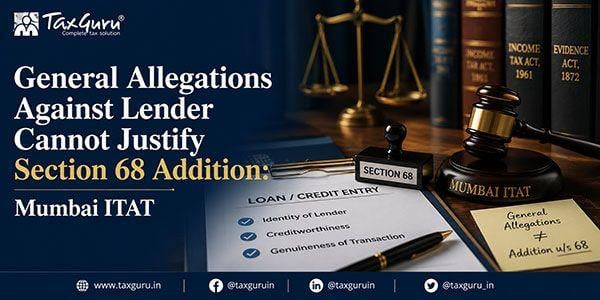
Income Tax
General Allegations Against Lender Cannot Justify Section 68 Addition: Mumbai ITAT
Income Tax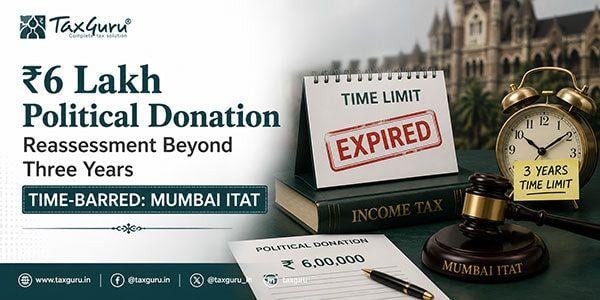
Income Tax
₹6 Lakh Political Donation Reassessment Beyond Three Years Time-Barred: Mumbai ITAT
Income Tax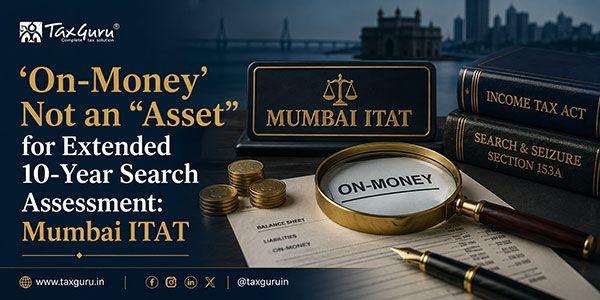
Income Tax
‘On-Money’ Not an “Asset” for Extended 10-Year Search Assessment: Mumbai ITAT
Goods and Services Tax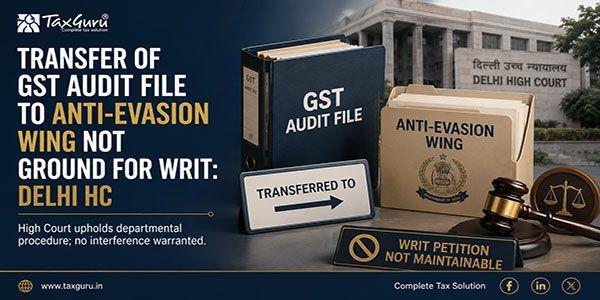
Goods and Services Tax
Transfer of GST Audit File to Anti-Evasion Wing Not Ground for Writ: Delhi HC
Goods and Services Tax
Goods and Services Tax

