
Type: Trending
3,627 articlesGoods and Services Tax
Goods and Services Tax
GST General Penalty Invalid Due to Prior Levy of Section 47 Late Fee: Madras HC
Income Tax
Income Tax
Section 54 Exemption not eligible on Sale of Open Land Without Building: ITAT Allahabad
Income Tax
Income Tax
No Addition Based on Confession Alone: HC Rejects Uncorroborated Search Statement
Income Tax
Income Tax
Section 194-IA TDS on Full Property Value Mandatory, Not Linked to Payment Timing: ITAT Bangalore
Goods and Services Tax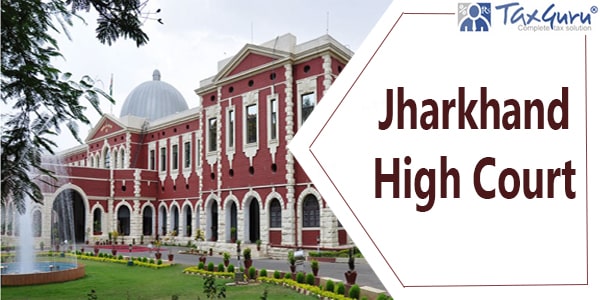
Goods and Services Tax
Jharkhand HC Orders Surrender in Fake GST Customs Officer Auction Fraud Case
Fema / RBI
Fema / RBI
RBI Must Reconsider NBFC Surrender Plea After Hearing: Calcutta HC
Custom Duty
Custom Duty
IGST Assessment Falls Within Customs Jurisdiction: Kerala HC
Goods and Services Tax
Goods and Services Tax
GST Not Applicable on Arbitral Damages Without Supply Element: Bombay HC
Goods and Services Tax
Goods and Services Tax
GST Penalty Order Invalid as Amount Exceeds SCN Proposal: Allahabad HC
Corporate Law
Corporate Law
Sale Deeds Invalid as Power of Attorney Not Proved Through Proper Evidence: SC
Income Tax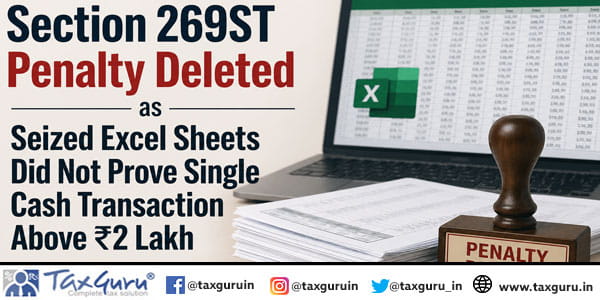
Income Tax
Section 269ST Penalty Deleted as Seized Excel Sheets Did Not Prove Single Cash Transaction Above ₹2 Lakh
Income Tax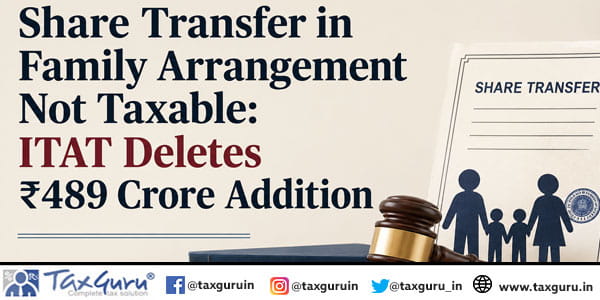
Income Tax
Share Transfer in Family Arrangement Not Taxable: ITAT Deletes ₹489 Crore Addition
Income Tax
Income Tax
Section 80GGC Deduction Denied as Donation Linked to Bogus Political Party Activities
Income Tax
Income Tax

