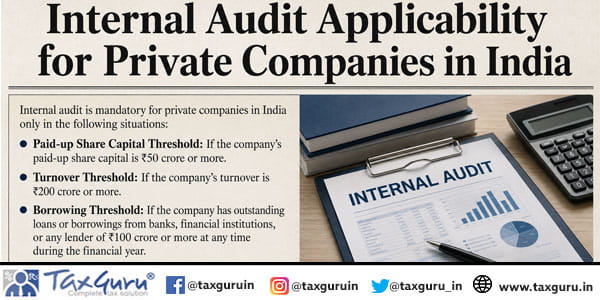
Private limited companies with turnover above ₹200 crore or borrowings exceeding ₹100 crore must appoint an internal auditor under the Companies Act, 2013. The article explains compliance rules, penalties and governance benefits.
AI-driven scrutiny and AIS integration are increasing Income Tax notices where property transactions occur below stamp duty value. Both buyers and sellers may face taxation under Sections 50C and 56(2)(x).
The article explains how gig platforms classify workers as independent partners to avoid minimum wage, social security, and dismissal protections. It highlights the urgent need for legal reforms recognizing algorithmic control as employment supervision.
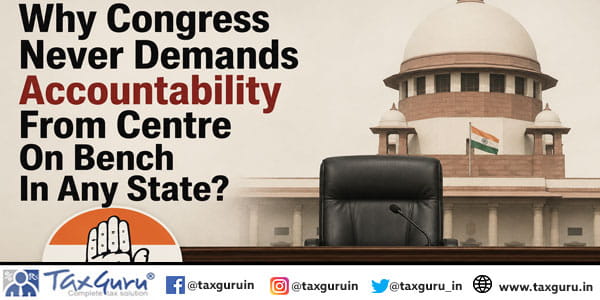
The article questions why Congress has not consistently demanded accountability from the Centre regarding creation of High Court Benches in states like Uttar Pradesh, Bihar, and Odisha. It highlights alleged regional disparities and references long-pending recommendations for new Benches.
The Tribunal accepted the assessee’s explanation that unspent cash withdrawn for labour and petty expenses was redeposited into the same bank account. The Section 68 addition was consequently deleted.
This case highlights that cash paid to builders as “on-money” will not automatically be treated as tax evasion if it originates from disclosed bank funds. However, buyers must prove the source with proper documentation to avoid tax additions.
The requirement applies if foreign assets or liabilities exist as of 31 March, even without fresh transactions. The rule ensures disclosure of outstanding FDI/ODI positions under FEMA reporting norms.
The CCI found that the investigation largely relied on comparisons with diagnostic labs and hotels rather than comparable super-specialty hospitals. The Commission ruled that such analysis was insufficient to prove exploitative pricing.
Commission found that patients undergoing elective treatment generally receive estimated treatment costs in advance and retain the ability to choose alternative hospitals. It therefore declined to treat in-patient services as a separate aftermarket under competition law.
The Competition Commission of India held that higher hospital charges alone do not establish abuse of dominance without proof that prices were excessive and unfair. The case against the hospital was closed for lack of sufficient evidence.