
Type: Orders
Find latest government, departmental and regulatory orders across taxation, corporate law, finance, banking, securities and other compliance matters.
Corporate Law
Corporate Law
IBBI Upholds RTI Exemption for Ongoing Investigation Records
Corporate Law
Corporate Law
IBBI Disposes RTI Appeal on CIRP Claim Information Access
Goods and Services Tax
Goods and Services Tax
57th GST Council Meeting Scheduled for September 12, 2026 in New Delhi
Corporate Law
Corporate Law
IBBI Suspends Insolvency Professional for Non-Cooperation & CIRP Compliance Lapses
Corporate Law
Corporate Law
PFRDA Drops Penalty on NPS PoP Over Alleged Compliance Failures
Corporate Law
Corporate Law
IBBI Cancels IP Registration for AR Rule Violations
Corporate Law
Corporate Law
IBBI Suspends Gaurav Katiyar for Two Years Over CIRP Lapses
Corporate Law
Corporate Law
IRDAI Warns Pramerica Life Over FY25 EoM Limit Breach
Corporate Law
Corporate Law
IRDAI Warns Edelweiss Life Over ₹89.95 Cr EoM Excess
Corporate Law
Corporate Law
IRDAI Warns Acko for Exceeding EoM Limits in FY 2024-25
Corporate Law
Corporate Law
IRDAI Warns Niva Bupa Over Excess EoM Expenses for FY 2024-25
Corporate Law
Corporate Law
IRDAI Cancels Administrator Appointment of Sahara India Life Insurance
Corporate Law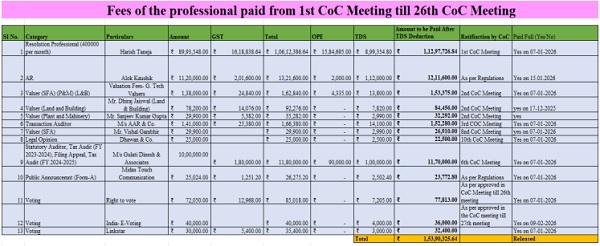
Corporate Law
IBBI Suspends Harish Taneja for Two Years Over CIRP Violations
Fema / RBI
Fema / RBI
Bankers Books Evidence Act 2026
Orders brings together statutory, administrative and regulatory orders published on TaxGuru across different areas of taxation, business and professional regulation. Orders may concern Income Tax, GST, Customs, Company Law, Corporate Law, DGFT, Excise, Service Tax, FEMA/RBI, SEBI and other subjects. They can address jurisdiction, procedures, authorisations, implementation, compliance dates and other statutory or administrative matters.

