The Companies Act 2013 is a crucial legislation in India governing the incorporation, functioning, and management of companies. Learn about the key provisions, compliance requirements, and legal framework under the Companies Act 2013.
CA, CS, CMA : A comprehensive guide covering 175 legal compliances for July 2026 under FEMA, Income Tax, GST, SEBI, Companies Act, Labour Laws, ...
Company Law : The Companies Act, 2013 requires most companies to hold four Board Meetings annually, while OPCs, Small Companies, and Dormant Com...
Company Law : This guide provides a complete AGM compliance tracker covering pre-AGM, AGM-day, post-AGM, and IEPF obligations under the Companie...
Company Law : MCA has revised the Director KYC framework, requiring DIR-3 KYC (Web) only once every three financial years. The changes reduce co...
Company Law : Learn how the Companies Act, 2013 regulates managerial remuneration through profit-linked limits, approval requirements, and gover...
Company Law : MCA has cautioned stakeholders against phishing calls, WhatsApp messages, emails, fake websites, and ZIP attachments impersonating...
Company Law : ICSI has urged the Government to amend the law to allow Company Secretaries in Practice to appear before DRTs and DRATs. It argues...
Company Law : ICSI has urged the MCA to ensure eligible companies comply with Section 203 by appointing Whole-time Company Secretaries. The repr...
Corporate Law : NSO has launched the Annual Survey of Incorporated Services Sector Enterprises (ASISSE) to collect comprehensive economic and oper...
Company Law : ICSI has requested the MCA to grant compliance relaxations following technical disruptions caused by the Data Centre fire. The pro...
Company Law : Madhya Pradesh HC dismissed a winding up petition, holding that a bona fide dispute over liability required adjudication before th...
Company Law : NCLT retained the freeze on assets citing serious SFIO findings but ordered defreezing of the salary account and family members' a...
Corporate Law : The Court ruled that, without a transfer application and parallel insolvency proceedings, shifting a winding-up case to NCLT was u...
Company Law : NCLT permitted stakeholder meetings after accepting clarifications on forfeited warrants, disclosures, and scheme compliance under...
Company Law : The NCLAT held that CFO nominees must satisfy the eligibility requirements under Section 203 of the Companies Act. It set aside th...
Company Law : MCA has allowed companies to file Form DPT-3 for FY 2025-26 without additional fees until 31 July 2026 due to disruptions caused b...
Company Law : MCA notifies the New Development Bank under Section 2(11)(ii) of the Companies Act, 2013, specifying it as a body corporate for th...
Company Law : ROC Mumbai penalized a director after Form AOC-4 contained an incorrect AGM due date. The order emphasizes that directors are resp...
Company Law : ROC Mumbai imposed a penalty after finding that an individual held two Director Identification Numbers in violation of Section 155...
Company Law : ROC Mumbai penalized a Whole Time Director for filing Form DIR-12 with an incorrect CFO appointment date. The order reiterates tha...
The concept of LLP in India was introduced off late in 2008 by enacting the LLP Act, 2008 thereby allowing businesses to be registered as a new and hybrid structure. It was anticipated at that time that many corporate houses would consider LLP as a vehicle to run their business operations, mainly due to lower […]
In this editorial author discusses due date of filling of LLP-8 with Registrar of Companies for financial year 2019-20 along with date of signing of Financial Statement of LLP-8. Lots of professionals has asked us about extension in filing of e-form LLP-8 for f.y. 2019-20. Provisions of Law: As per Section 34 read with rule […]
RELAXATION DUE TO CoVID 19 Companies Act, 2013 & LLP Act, 2008 till December 31, 2020 In this article author shall discuss about Relaxation given by MCA for Compliances under Companies Act, 2013 and LLP Act, 2008 till December 31, 2020. MCA has relaxed Due Dates for Filing of Forms, holding of Meetings etc. MCA has issued […]
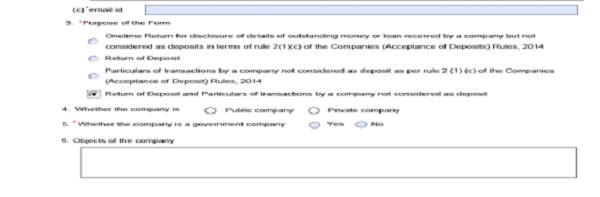
In this editorial author discusses about DPT-3. DPT-3 is annual return which is required to be filed every year by Companies having any amount of loan or advances as on 31st March within 90 days of end of financial year i.e. upto 30th June. Q 1. What are the objectives of e-Form DPT-3? Ans. The […]
In this Article author discusses about requirement of auditor certificate for filing of e-form DPT-3. Whether auditor certificate mandatory for all the DPT-3, if not then what are the situations when certificate from auditor required for DPT-3? Point of Editorial: Is Chartered Accountant Certificate required for e-form DPT-3? This is very crucial question in respect […]
In this Article author discusses how to file DPT-3 form when a Private Limited/ Public Limited Company having loan from shareholders (HUF, Trust, Individual etc.) As per exemption notification dated 05th June 2015 and 13th June 2017 Private Limited Companies are allowed to accept Loan from Shareholders of Company after following the process mentioned under […]
Key Take Away – THE COMPANIES (AMENDMENT) BILL, 2020 Passed by Lok Sabha & Rajya Sabha Government has passed the Companies (Amendment) Bill, 2020 as Bill No. 88 of 2020 to further amend Companies Act, 2013 on March 12, 2020. Companies (Amendment) Bill, 2020 based on CLC Committee. CLC Committee submitted its report in November […]
Till 16th October, 2019, Foreign Investment was governed, by RBI in consultation with Central Government, by Foreign Exchange Management (Transfer or Issue of Security by a Person Resident outside India) Regulations, 2017, called as TISPRO. Pursuant to amendment made in FEMA through Finance Act 2015, Central Government is empowered to make rules for Capital Account […]
Net worth of a company is the value of the assets a company owns, minus the liabilities they owe. It is an important metric to gauge a company’s health and value, providing a useful snapshot of its current financial position. The concept of Networth becomes more relevant in ascertaining transactional values in an amalgamation, specifically […]
Compounding is a settlement mechanism, by which, the offender is given an option to pay money in lieu of prosecution, thereby avoiding a long and lengthy litigation proceedings. Thus, it is short cut mean to get the default tag removed by paying a sum of money. It is beneficial for both the Government and Defaulter. Government gets some revenue for minor defaults and the offender will get their hands clean.