
Courts: Supreme Court of India
Read latest Supreme Court of India judgments and orders on Income Tax, GST, Customs, Company Law and other taxation, corporate and commercial laws.

NIA FIR Re-Registration Is Not Second FIR; Further Investigation Valid: Supreme Court
Anticipatory Bail Cannot Be Mechanically Denied After Cooperation: Supreme Court

SC Dismisses Revenue SLP on Section 153A Addition Without Incriminating Material

Supreme Court Dismisses Customs Appeals as ₹1.29 Crore Tax Effect Falls Below ₹2 Crore Limit

Supreme Court Stays Section 153C Proceedings in Siddharth Totuka Case
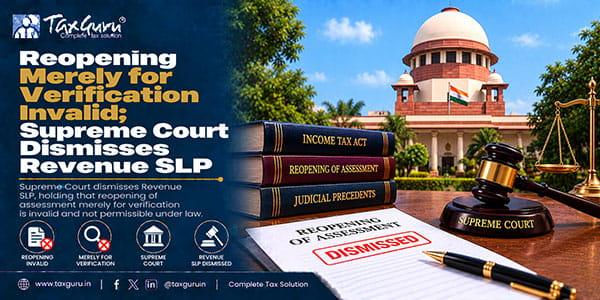
Reopening Merely for Verification Invalid; Supreme Court Dismisses Revenue SLP
NCDRC Appellate Order Can Be Challenged Under Article 227 Before HC: SC
Suppression of Material Facts Disentitles Litigant to Judicial Relief: Supreme Court
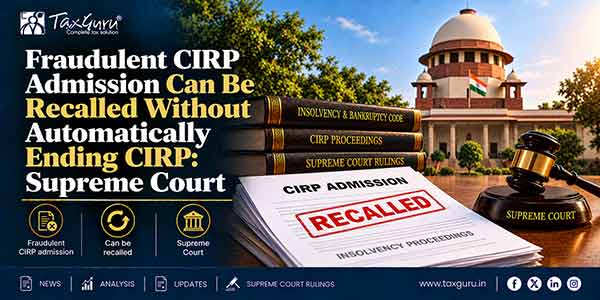
Fraudulent CIRP Admission Can Be Recalled Without Automatically Ending CIRP: Supreme Court

Disputed Contract Claim Cannot Be Recovered as Ascertained Debt: Supreme Court

Supreme Court Quashes SARFAESI Auction Sale for Violating Mandatory Statutory Safeguards
Section 138 Notice Received by Drawer’s Mother Is Valid Service: Supreme Court
Supreme Court Declines Interference in JSW Steel PMLA Proceedings
₹2 Crore GST Monetary Limit Applies to Pending Appeals: Supreme Court
Supreme Court of India brings together Supreme Court judgments and orders published on TaxGuru concerning taxation, corporate, commercial and regulatory laws. The archive covers Income Tax, GST, Customs, Company Law, insolvency, constitutional and other legal issues relevant to taxpayers, businesses and professionals. Readers can research authoritative rulings on statutory interpretation, substantial questions of law, constitutional issues and appeals from High Courts and tribunals. Chartered Accountants, advocates, tax professionals, companies and legal researchers can use this category to follow important Supreme Court jurisprudence relevant to taxation and business laws.

