
Courts: Punjab and Haryana High Court
Find latest Punjab and Haryana High Court judgments, orders and case laws on Income Tax, GST, Customs, Company Law and other taxation and commercial matters.
GST Appeal Cannot Be Dismissed for Non-Prosecution: Punjab and Haryana HC
Capital Gains JDA Dispute Governed by C.S. Atwal: Punjab & Haryana HC

Punjab & Haryana HC Directs Police Assistance for SARFAESI Physical Possession
Punjab & Haryana HC Quashes GST Pre-Charge Evidence Orders Without Summoning
P&H HC Quashes Time-Barred Assessment for Superior Officer Intervention
Customs Show Cause Notice Quashed for Inordinate Delay in Adjudication: P&H HC
Pending Interest Writ Eligible Under Vivad Se Vishwas Scheme 2024: P&H HC
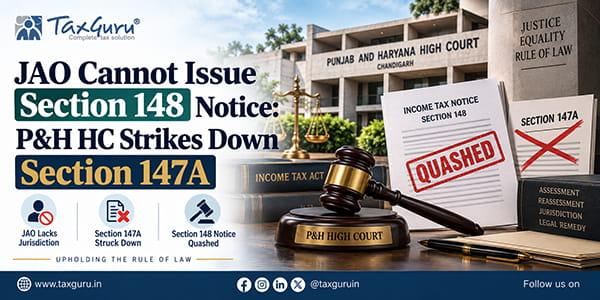
JAO Cannot Issue Section 148 Notice: P&H HC Strikes Down Section 147A
Section 74 Cannot Be Invoked to Question CENVAT Credit Under Pre-GST Regime: P&H HC
P&H HC Sets Aside GST Cancellation Notice for Lack of Supporting Documents
P&H HC Remits GST Demand Against Deceased Proprietor for Fresh Adjudication
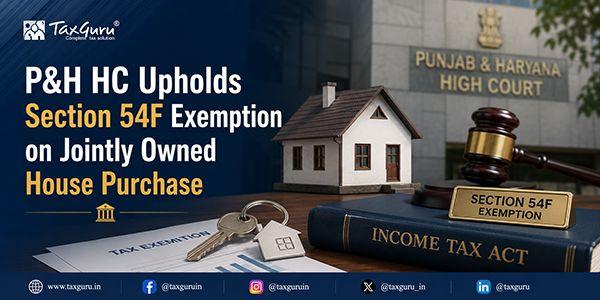
P&H HC Upholds Section 54F Exemption on Jointly Owned House Purchase
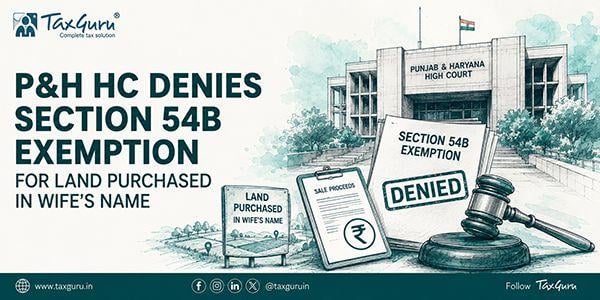
P&H HC Denies Section 54B Exemption for Land Purchased in Wife’s Name
P&H High Court Sets Aside GST Assessment for Denial of Hearing Under Section 75(4)
Punjab and Haryana High Court judgments and orders provide important precedents on taxation, commercial, corporate and other legal matters. This TaxGuru page brings together Punjab and Haryana High Court case laws concerning Income Tax, GST, Customs, tax demands, reassessment, deductions, penalties, Company Law and other disputes relevant to taxpayers and businesses. Chartered Accountants, advocates, companies, tax professionals and other readers can use this collection to research judicial precedents and follow important legal developments. TaxGuru publishes recent as well as significant earlier Punjab and Haryana High Court decisions with summaries and analysis explaining the principal issues and legal findings. This dedicated page provides a convenient resource for researching tax, business, commercial and regulatory jurisprudence of the Punjab and Haryana High Court.

