
Courts: Punjab and Haryana High Court
Find latest Punjab and Haryana High Court judgments, orders and case laws on Income Tax, GST, Customs, Company Law and other taxation and commercial matters.
P&H HC Sets Aside GST Order for Denial of Mandatory Personal Hearing

Nine-Year Delay & New Employment: P&H HC Awards ₹2 Lakh Compensation
Tax Classification Takes Supreme Route: P&H High Court Closes Wrong Appellate Door
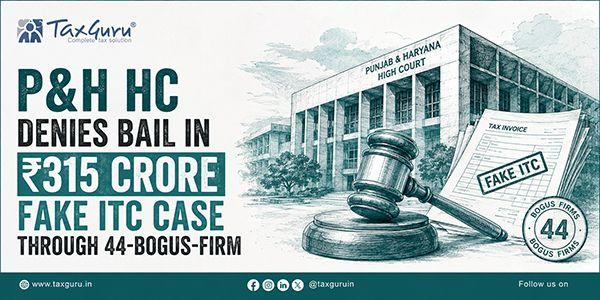
P&H HC Denies Bail in ₹315 Crore Fake ITC Case through 44-Bogus-Firm
GST Portal Upload Alone Insufficient for Valid Notice Service: P&H HC
GST Arrest Valid Where Detailed Written Grounds Were Supplied: P&H HC
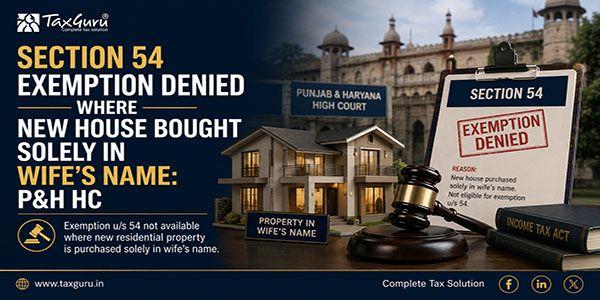
Section 54 Exemption Denied Where New House Bought Solely in Wife’s Name: P&H HC
GST Portal Upload Alone Not Proper Service Under Sections 169 & 146 of CGST Act: P&H HC
Retrospective GST Registration Cancellation Without Prior Notice Quashed: P&H HC
Final Assessment Quashed as DRP Objection Intimation Failure Was Bona Fide: P&H HC
₹47.50 Crore Fake ITC Case: P&H HC Grants Bail After Four Months
P&H HC: GST Portal Upload Alone Does Not Constitute Valid Service
Punjab & Haryana HC Upholds PMLA Attachment of Pre-Offence Properties
GST Notice and Order Cannot Be Served Merely by Portal Upload: P&H HC
Punjab and Haryana High Court judgments and orders provide important precedents on taxation, commercial, corporate and other legal matters. This TaxGuru page brings together Punjab and Haryana High Court case laws concerning Income Tax, GST, Customs, tax demands, reassessment, deductions, penalties, Company Law and other disputes relevant to taxpayers and businesses. Chartered Accountants, advocates, companies, tax professionals and other readers can use this collection to research judicial precedents and follow important legal developments. TaxGuru publishes recent as well as significant earlier Punjab and Haryana High Court decisions with summaries and analysis explaining the principal issues and legal findings. This dedicated page provides a convenient resource for researching tax, business, commercial and regulatory jurisprudence of the Punjab and Haryana High Court.

