
Courts: Punjab and Haryana High Court
Find latest Punjab and Haryana High Court judgments, orders and case laws on Income Tax, GST, Customs, Company Law and other taxation and commercial matters.
IBC Moratorium Does Not Extinguish Directors’ NI Act Liability: P&H HC
Punjab & Haryana HC Quashes ₹16.74 Billion Service Tax Demand Notice

Uploading SCN on GST Portal Alone Is Not Valid Service: Punjab & Haryana HC
Punjab & Haryana HC Grants Bail in ₹9.66 Crore Fake ITC Case
P&H HC Sets Aside GST Section 122 Penalty for Absence of SCN
Only NFAC Could Issue Section 148 Notice Under CBDT Notification: P&H HC
GST Sections 73 & 74 Inapplicable to Pre-GST VAT ITC Disputes: P&H HC
P&H HC HC Allows Appeal Against PVAT Penalty for Absence of Intent to Evade Tax
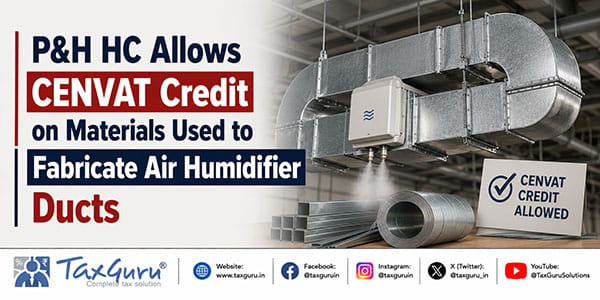
P&H HC Allows CENVAT Credit on Materials Used to Fabricate Air Humidifier Ducts
P&H HC Quashes Retrospective GST Registration Cancellation Beyond SCN
P&H HC Upholds CENVAT Credit on Steel Items Used for Capital Goods
AI Tool Has No Legal Sanction to Prepare GST SCN: P&H HC
P&H HC Quashes GST Order as Hearing Was Fixed Before Reply Deadline
P&H HC Sets Aside Section 73 Order for Failure to Give Reasons
Punjab and Haryana High Court judgments and orders provide important precedents on taxation, commercial, corporate and other legal matters. This TaxGuru page brings together Punjab and Haryana High Court case laws concerning Income Tax, GST, Customs, tax demands, reassessment, deductions, penalties, Company Law and other disputes relevant to taxpayers and businesses. Chartered Accountants, advocates, companies, tax professionals and other readers can use this collection to research judicial precedents and follow important legal developments. TaxGuru publishes recent as well as significant earlier Punjab and Haryana High Court decisions with summaries and analysis explaining the principal issues and legal findings. This dedicated page provides a convenient resource for researching tax, business, commercial and regulatory jurisprudence of the Punjab and Haryana High Court.

