
Courts: Madras High Court
Find latest Madras High Court judgments, orders and case laws on Income Tax, GST, Customs, Company Law, IBC and other tax and commercial matters.

₹1.5 Crore GST Composition Threshold Effective From 01.04.2019: Madras HC
Delayed Duty Drawback Recovery Beyond Reasonable Period Quashed: Madras HC

Finance Company Cannot Avoid Liability for Branch Staff’s Jewel Fraud: Madras HC

GST Assessment Recording No Reply Despite Reply on Record Set Aside: Madras HC
Section 13 Violation Does Not Forfeit Entire Trust Exemption: Madras HC
Bank Account Freeze Cannot Exceed Customs Section 110(5) Time Limit: Madras HC
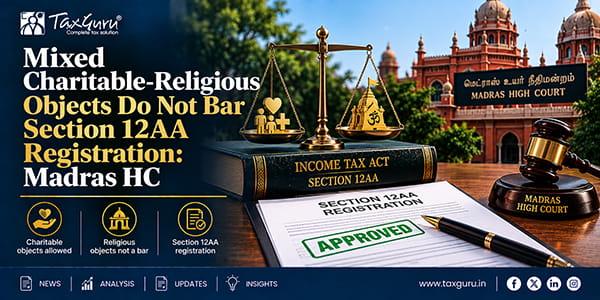
Mixed Charitable-Religious Objects Do Not Bar Section 12AA Registration: Madras HC
Auction Purchaser Encashing Refund Cannot Challenge Sale Cancellation: Madras HC
Borrower Retains Redemption Right Where SARFAESI Sale Is Invalid: Madras HC

Madras HC Permits Statutory Appeal Subject to Tax and Interest-Penalty Deposit
Contractors’ Purchases from Unregistered Dealers Attract Purchase Tax: Madras HC
Vague Section 271AAB Penalty Notice Invalid: Madras High Court
10% GST Penalty Pre-Deposit Not Required When Tax Also Demanded: Madras HC
GST Refund Limitation Objection Requires Show Cause Notice: Madras HC
Madras High Court judgments and orders constitute an extensive source of jurisprudence concerning taxation, corporate and commercial disputes. This TaxGuru page brings together Madras High Court case laws on Income Tax, GST, Customs, Company Law, insolvency, input tax credit, refunds, reassessment, tax demands, penalties and other legal matters. Taxpayers, companies, Chartered Accountants, advocates and tax professionals can use this collection to research judicial precedents and follow developments affecting tax and business law. TaxGuru publishes recent and significant earlier Madras High Court decisions with summaries and analysis highlighting important issues and legal principles. The page provides a convenient resource for researching taxation, corporate, commercial and regulatory litigation before the Madras High Court.

