
Courts: Madras High Court
Find latest Madras High Court judgments, orders and case laws on Income Tax, GST, Customs, Company Law, IBC and other tax and commercial matters.

Section 276CC Conviction Unsustainable Without Established Tax Liability: Madras HC

Madras HC Quashes AY 2015-16 Reassessment Notice Issued After 1 April 2021
GST Cancellation Set Aside on Compliance With Pending Return Conditions: Madras HC
Section 80P Deduction Cannot Be Denied Merely for Return Delay: Madras HC

Appeal & Pre-Deposit Does Not Automatically Unblock ITC: Madras HC

Portal-Only Service Leads Madras High Court to Permit Delayed GST Appeal
Government Special Package to Workmen Exempt u/s 10(10B); No TDS on Compensation: Madras HC

Section 234E Late Fee Applies Even Before June 2015: Madras HC
Customs Broker Penalty Set Aside as Abetment of Prohibited Export Not Established: Madras HC
Madras HC Quashes Section 153B Search Assessments as Time-Barred After TOLA Computation
Madras HC Permits Application for Return of Detained Gold Jewellery for Re-Export
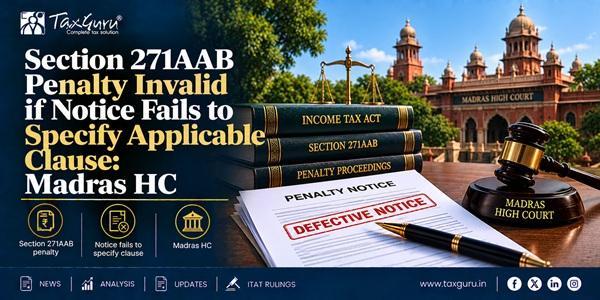
Section 271AAB Penalty Invalid if Notice Fails to Specify Applicable Clause: Madras HC
TNVAT Turnover-Based Pulses Exemption is Conditional; Purchase Tax Applies: Madras HC
GST Hearing Notices Should Also Be Sent by SMS or Email: Madhya Pradesh HC
Madras High Court judgments and orders constitute an extensive source of jurisprudence concerning taxation, corporate and commercial disputes. This TaxGuru page brings together Madras High Court case laws on Income Tax, GST, Customs, Company Law, insolvency, input tax credit, refunds, reassessment, tax demands, penalties and other legal matters. Taxpayers, companies, Chartered Accountants, advocates and tax professionals can use this collection to research judicial precedents and follow developments affecting tax and business law. TaxGuru publishes recent and significant earlier Madras High Court decisions with summaries and analysis highlighting important issues and legal principles. The page provides a convenient resource for researching taxation, corporate, commercial and regulatory litigation before the Madras High Court.

