
Courts: ITAT Chennai
Find latest ITAT Chennai judgments, orders and case laws on income tax covering assessments, deductions, transfer pricing, capital gains, TDS, reassessment and penalties.

Section 263 Cannot Cure Wrong Penalty Provision in Assessment Order: ITAT Chennai
No Section 36(1)(iii) Disallowance Where Own Funds Exceed Investments: ITAT Chennai
ITAT Chennai: Delay Due to Pending Writ Petition Condoned; CIT(A) Directed to Hear Appeal
Chennai ITAT: Agricultural Income Claim Restored for Fresh Opportunity
Chennai ITAT: Ex-Gratia Under Pfizer Separation Scheme Is Capital Receipt
Chennai ITAT Remands Section 10(37) Agricultural Land Exemption Claim on Vizhinjam Seaport Acquisition
Chennai ITAT Allows BSNL Retrenchment Benefit Exemption Despite No Revised Return
Chennai ITAT Allows BSNL Ex-Gratia Exemption Despite No Revised Return, Citing CBDT Circular
No Section 270A Penalty After Quantum Assessment Quashed: ITAT Chennai
Section 87A Rebate Available on STCG Under Section 111A: ITAT Chennai
ITAT Chennai Upholds Section 263 for Lack of Inquiry in Faceless Assessment
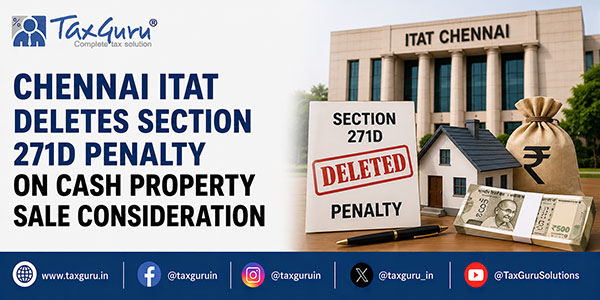
Chennai ITAT Deletes Section 271D Penalty on Cash Property Sale Consideration
Chennai ITAT: 80G Approval Cannot Be Denied Without Verifying Religious Expenditure

Chennai ITAT Deletes ₹7 Lakh Addition; Cash Gift from Son Proven by Cash Flow
ITAT Chennai judgments and orders address a wide range of income-tax disputes involving individuals, businesses and corporate taxpayers. This TaxGuru page compiles ITAT Chennai case laws relating to assessments, deductions, exemptions, business income, capital gains, transfer pricing, international taxation, TDS, reassessment, unexplained income, penalties and procedural matters. Chartered Accountants, advocates, taxpayers and tax professionals can use the collection to research Tribunal precedents and follow developments in income-tax jurisprudence. The page includes recent as well as significant earlier ITAT Chennai decisions published on TaxGuru for convenient direct tax research.

