
Courts: ITAT Chandigarh
Find latest ITAT Chandigarh judgments, orders and case laws on income tax covering assessments, additions, deductions, exemptions, capital gains, reassessment and penalties.

ITAT Chandigarh Treats Survey Surrender as Business Income, Rejects 60% Section 115BBE Rate
ITAT Chandigarh Condones 150-Day Delay Subject to Plantation of Up to 500 Trees
Survey Surrender is Business Income, ITAT Chandigarh Rejects 115BBE Rate
NRI Assessee Was Abroad During ₹58.50 Lakh Cash Deposit in Joint Account: ITAT Deletes Addition
ITAT Chandigarh Quashes Time-Barred Section 148 Notice for AY 2015-16
Wrong ITR Form Cannot Justify Double Taxation: ITAT Deletes ₹26.69-Lakh Form 26AS Addition
DVO Estimate Cannot Justify ₹2.12-Crore Addition u/s 69
Incomplete Trust Deed Does Not End 12AB Registration: ITAT Orders Fresh Examination
Nigeria, Hong Kong & “Source of Source” Additions Deleted u/ss 40(a)(i), 37 & 68: ITAT Chandigarh
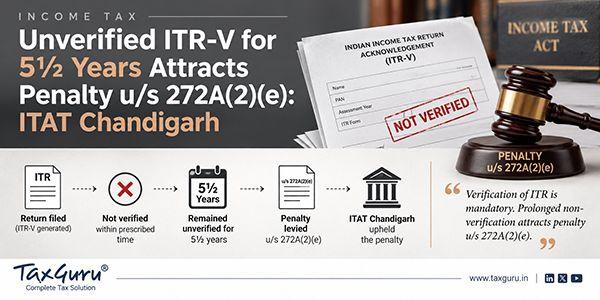
Unverified ITR-V for 5½ Years Attracts Penalty u/s 272A(2)(e): ITAT Chandigarh
Kirana Cash Deposits During Demonetisation Not Unexplained u/ss 68 & 69A: ITAT Chandigarh
Belated Return Does Not Invalidate Assessment Without Section 143(2) Notice: ITAT Chandigarh
ITAT Chandigarh Deletes Power and Steam Transfer Pricing Adjustments
ITAT Chandigarh Deletes Section 68 Addition on Demonetization Cash Sales for Lack of Adverse Evidence
ITAT Chandigarh judgments and orders cover appeals involving a broad range of issues under the Income-tax Act. This page compiles Tribunal decisions on assessments, additions, deductions, exemptions, capital gains, business income, unexplained income, reassessment, TDS, penalties, limitation and procedural matters. Taxpayers, Chartered Accountants, advocates, businesses and consultants can use the ITAT Chandigarh category to locate relevant precedents and research income-tax disputes. TaxGuru updates this collection with Tribunal decisions published on the website, providing convenient access to recent and important earlier ITAT Chandigarh case laws.

