
Courts: Gujarat High Court
Find latest Gujarat High Court judgments, orders and case laws on Income Tax, GST, Customs, Company Law, IBC and other tax and commercial matters.
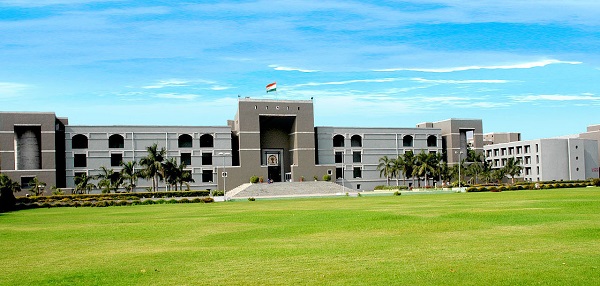
Section 179 Not Applicable to Public Company Director Merely Due to 98% Shareholding: Gujarat HC

Non-Land Forestry Expenses Not Agricultural Expenditure: Gujarat High Court
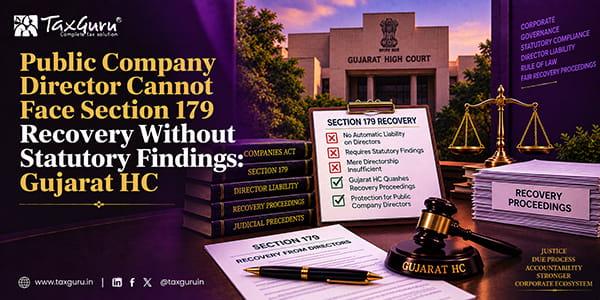
Public Company Director Cannot Face Section 179 Recovery Without Statutory Findings: Gujarat HC
ITC Reversal on Non-Taxable GIDC Leasehold Transfer Unsustainable: Gujarat HC

120-Day Release of Seized Cash Under Section 132B Referred to Larger Bench: Gujarat HC
Forest Entry Fees for Sovereign Functions Not Taxable as Tour Operator: Gujarat HC
Voluminous E-Way Bill Analysis Prompts Interim GST Protection: Gujarat HC
Interest on Income Tax Refund Cannot Be Denied Using Later Amendment: Gujarat HC
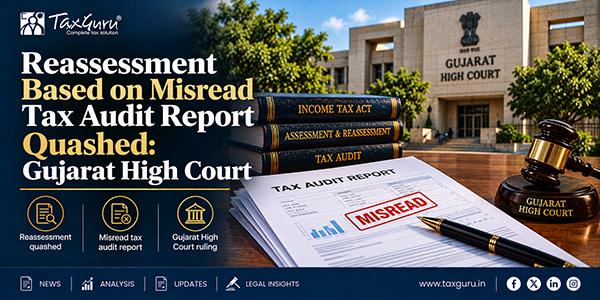
Reassessment Based on Misread Tax Audit Report Quashed: Gujarat High Court
Sun Pharma Sikkim’s Section 80IE Deduction Upheld; Revenue Appeals Dismissed: Gujarat HC
Repaid Bank Loans Cannot Be Treated as Unexplained Credits: Gujarat HC
Diary-Based ₹6.77 Crore Addition Deleted for Lack of Corroboration: Gujarat HC
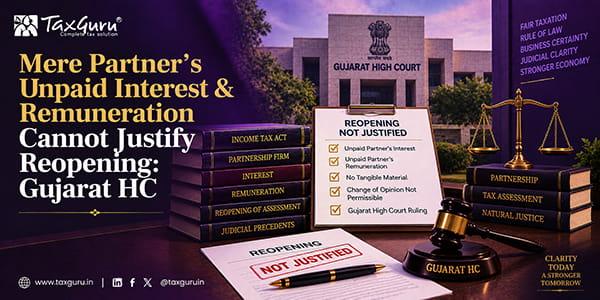
Mere Partner’s Unpaid Interest & Remuneration Cannot Justify Reopening: Gujarat HC
No GST Recovery During Section 67 Search Proceedings: Gujarat HC
Gujarat High Court judgments and orders provide significant guidance on taxation, commercial and regulatory issues. This TaxGuru page compiles Gujarat High Court case laws concerning Income Tax, GST, Customs, Company Law, insolvency, input tax credit, refunds, reassessment, tax demands, penalties and other legal matters. Taxpayers, businesses, Chartered Accountants, advocates and professionals can use this collection to research important judicial precedents and follow developments affecting taxation and business. TaxGuru brings together recent and significant earlier Gujarat High Court decisions with summaries and analysis of key issues and legal principles. This dedicated page provides convenient access to case law relevant to tax, corporate, commercial and regulatory disputes considered by the Gujarat High Court.

