
Courts: ITAT Delhi
Find latest ITAT Delhi judgments, orders and case laws on income tax covering assessments, transfer pricing, international taxation, deductions, TDS, reassessment and penalties.

ITAT Orders Fresh Look at Agricultural Land Taxability
ITAT Quashes Reassessment for Absence of Section 143(2) Notice
ITAT Deletes Section 270A Penalty for Failure to Specify Misreporting Limb
Delhi ITAT Allows TDS Appeal on Joint Property Purchase Below ₹50 Lakh Share

Recorded Group Cash-in-Hand Accepted; Section 69A Additions Based on Incomplete Tally Data Deleted: Delhi ITAT
TPO Reference Mandatory for Arm’s Length Price Determination: ITAT Delhi
ITAT Delhi Quashes Income Tax Reassessment Notice Issued 3 Days Beyond Six-Year Limit
ITAT Delhi Directs Refund of Excess Dividend Distribution Tax Paid by Vedanta
ITAT Delhi Deletes Section 68 Addition on Demonetisation Cash Sales Without Rejecting Books
ITAT Delhi Quashes Reassessment Based Solely on Revenue Audit Objection
Delhi ITAT Deletes Section 68 Addition on Unsecured Loans for Lack of AO Verification
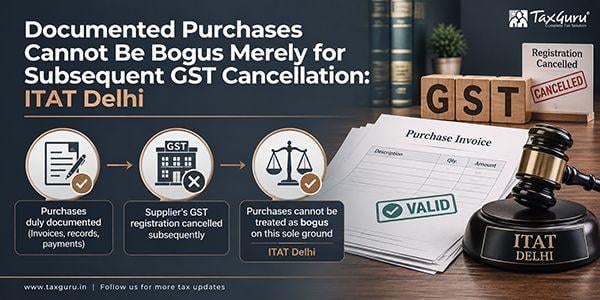
Documented Purchases Cannot Be Bogus Merely for Subsequent GST Cancellation: ITAT Delhi
Search Clock Starts on Seized Material Receipt; AYs 2011-12 & 2012-13 Outside Section 153C
Unsigned, Undated Section 151 Approval Invalid; Reassessment Quashed by ITAT Delhi
ITAT Delhi judgments and orders constitute a substantial body of appellate case law under the Income-tax Act. This page compiles ITAT Delhi decisions concerning assessments, additions, deductions, exemptions, business income, capital gains, transfer pricing, international taxation, TDS, reassessment, unexplained income, penalties, limitation and procedural disputes. Companies, individuals, Chartered Accountants, advocates and tax professionals can use this collection to research Tribunal precedents relevant to income-tax matters. TaxGuru brings together recent and significant earlier ITAT Delhi judgments and orders, providing a convenient resource for following developments in direct tax jurisprudence and researching recurring issues arising in assessments and appeals.

