
Courts: All High Courts
Read latest High Court judgments and orders on Income Tax, GST, Customs, Company Law and other taxation, corporate, commercial and regulatory matters.
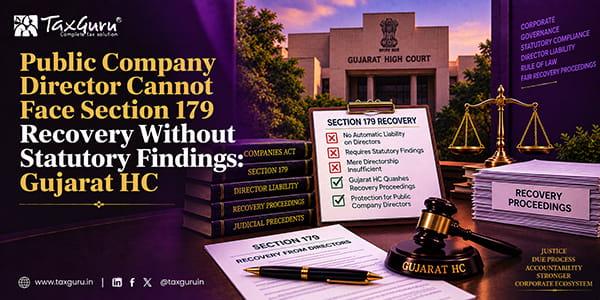
Public Company Director Cannot Face Section 179 Recovery Without Statutory Findings: Gujarat HC

Section 148 Notice for Previously Assessed Transaction Is Illegal: Delhi High Court

Parallel Scrutiny After Section 170A Modified Return Invalid: Bombay High Court

Calcutta HC Stays SFIO Probe Into Alleged Misuse of HNGIL Provident Fund Trust

Section 35(3) BNSS Notice Must Precede Curtailment of Liberty: Karnataka HC

Secured Creditor Gets Priority Over Government Dues: Bombay HC

Bank Statements & UPI Payments Prima Facie Linked Drug Supplier: Sikkim HC Denies Bail

₹4 Crore Security Deposit Refunded to Zydus Healthcare: Sikkim HC Closes Writ
Customs Must Identify Statutory Basis Before Treating Adult Sex Toys as Prohibited Goods: Calcutta HC

ITC Reversal on Non-Taxable GIDC Leasehold Transfer Unsustainable: Gujarat HC

Already Taxed Demerged Income Cannot Trigger Reassessment: Telangana HC
Reassessment for Further Verification Without Escapement Material Quashed: Telangana HC
Rule 96(10) CGST Rules Omission Applies to Pending Refund Proceedings: Karnataka HC
Customs Cannot Deny Gold Redemption After Failing to Quantify Duty: Delhi HC
All High Courts brings together judgments and orders of High Courts across India published on TaxGuru. The archive covers Income Tax, GST, Customs, Company Law, Corporate Law, insolvency, commercial laws and other taxation and regulatory matters. Readers can research important questions of law, constitutional challenges, writ petitions, statutory appeals and other proceedings decided by different High Courts. Chartered Accountants, advocates, tax professionals, businesses and legal researchers can use this consolidated archive to follow High Court jurisprudence across India. Separate High Court categories are available for court-specific judgments and orders.

