

Articles by this Author
Income Tax
Income Tax
Pune ITAT: Lift Cost of Real-Estate Project Not Disallowed as Prior-Period Expense
Income Tax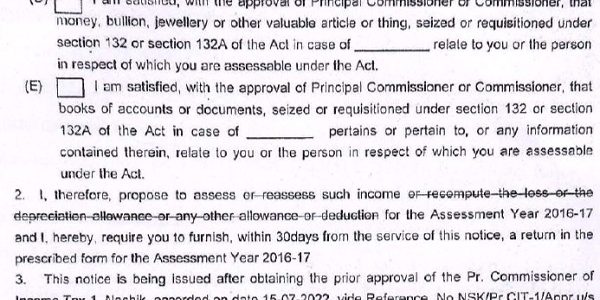
Income Tax
Pune ITAT: AY 2016-17 Reassessment Quashed; PCIT Sanction Invalid Beyond 3 Years
Income Tax
Income Tax
Pune ITAT: 25% Addition Limited to ₹16.54 Crore Unproved Purchases, Not to Entire Purchases
Income Tax
Income Tax
Pune ITAT: Reopening Beyond 3 Years Quashed; ₹12.56 Lakh Escapement Below ₹50 Lakh Threshold
Income Tax
Income Tax
Mumbai ITAT: 19 Search Appeals Restored for 153A, 153D Approval & Limitation Review
Income Tax
Income Tax
Mumbai ITAT: LP Steam Not Nil-Cost By-Product; ₹32.20 Crore Section 80-IA Deduction Allowed
Income Tax
Income Tax
Loose Sheets Without Corroboration Cannot Sustain Capitation Fee Addition: Karnataka HC
Income Tax
Income Tax
Bangalore ITAT: TDR Sale Taxable as Capital Gains After Deducting Surrendered Land Value
Income Tax
Income Tax
Karnataka HC: No TDS on Compensation for Compulsory Land Acquisition
Income Tax
Income Tax
Karnataka HC: Capitation Fee Additions Deleted Following Earlier Judgment
Income Tax
Income Tax
Karnataka HC: Section 41(1) Addition Deleted for Lack of Evidence of Liability Cessation
Income Tax
Income Tax
Karnataka HC Upholds Section 12A Registration; No Automatic Sections 11–12 Exemption
Income Tax
Income Tax
Karnataka HC: CAT Can Reconsider Pay Parity Claim as Fresh Decision Not Barred by Res Judicata
Income Tax
Income Tax

