CESTAT Delhi held that statements recorded during investigation cannot be relied upon as evidence unless the mandatory procedure under Section 9D—examination before adjudicating authority and admissibility determination—is followed.
Avanti Feeds Limited Vs Deputy Commissioner of State Tax (Andhra Pradesh High Court) The writ petition before the Andhra Pradesh High Court concerned the jurisdiction to assess and recover Integrated Goods and Services Tax (IGST) on imported goods and the authority of State GST officers to initiate proceedings in relation to such imports. The petitioner, […]
ITAT Mumbai held that payments made to third-party vendors on a cost-to-cost basis, without any value addition by the assessee, should be treated as pass-through costs and excluded from PLI computation.
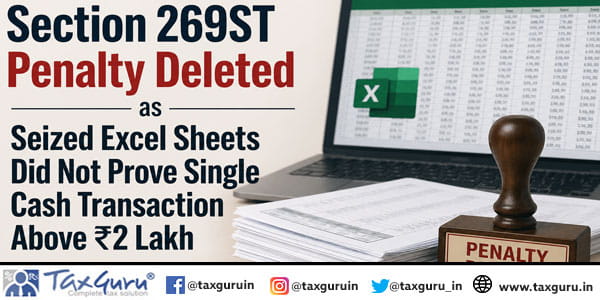
The Tribunal held that consolidated Excel entries showing aggregate cash sales were insufficient to establish receipt of ₹2 lakh or more in a single transaction, and penalty under Section 271DA could not be sustained.
The Tribunal deleted purchase disallowances after noting invoices, transport records, weighbridge slips, tax returns and bank payments supported actual procurement and use of materials in infrastructure projects.
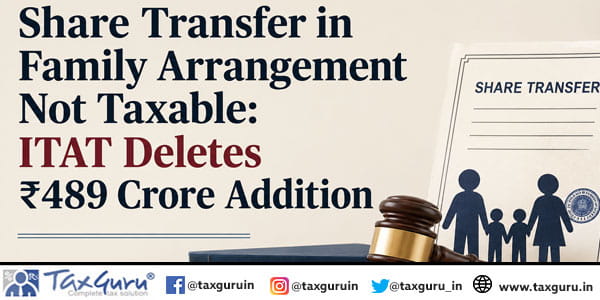
The issue was whether a share transfer without consideration constituted taxable capital gains. The Tribunal held that genuine family realignment is not taxable.
High Court held that receipts reflected in Form 26AS cannot automatically be treated as taxable services. Tax liability must first be established under the charging provisions of law after examining the nature of the receipts.
The Tribunal held that the margin between purchase and sale of vehicles is trading profit, not commission. Service Tax demand on such margin was therefore unsustainable.
The Tribunal held that credit depends on the nature of duty and not the rate at which it is paid. The key takeaway is that concessional CVD does not bar CENVAT credit.
The Court held that taxes paid under GST must be reimbursed under contractual terms. The key takeaway is that proof of payment ensures entitlement to reimbursement.