
Type: Trending
3,627 articlesIncome Tax
Income Tax
No Section 270A Penalty for Bona Fide Inadvertent Section 35D Claim: ITAT Bangalore
Goods and Services Tax
Goods and Services Tax
Telangana HC Quashes GST Registration Cancellation for Grounds Beyond SCN
Corporate Law
Corporate Law
No Negligence Deduction for Pillion Rider in Motor Accident Claim: Allahabad HC
Income Tax
Income Tax
ITAT Mumbai Deletes Section 69A Penny Stock Addition for Lack of Evidence
Income Tax
Income Tax
Section 87A Bar Applies Only to Equity LTCG Under Section 112A: ITAT Chandigarh
Income Tax
Income Tax
Mumbai ITAT Deletes On-Money Addition Without Cross-Examination
Income Tax
Income Tax
Section 148 Reopening Cannot Rest on Presumptions of On-Money Receipt: Gujarat HC
Income Tax
Income Tax
Notional Interest Income Cannot Be Taxed Under Section 40A(2)(b): ITAT Jaipur
Income Tax
Income Tax
Gujarat HC Quashes Section 148 Notice Based on Factually Incorrect Penny Stock Allegation
Income Tax
Income Tax
Chennai ITAT Deletes Section 271D Penalty on Cash Property Sale Consideration
Income Tax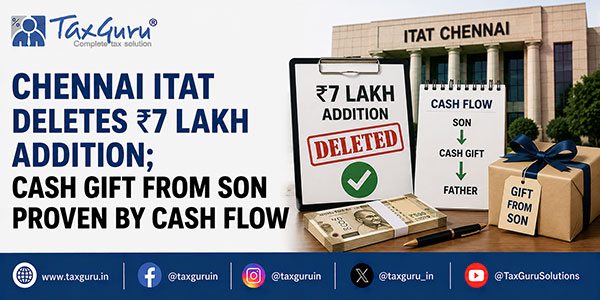
Income Tax
Chennai ITAT Deletes ₹7 Lakh Addition; Cash Gift from Son Proven by Cash Flow
Income Tax
Income Tax
Mumbai ITAT Deletes Section 68 Addition on Genuine Intraday Penny Stock Trade
Income Tax
Income Tax
Chennai ITAT Quashes Section 263 Revision; PCIT Can’t Revise Merged Penalty Order
Income Tax
Income Tax

