
Type: Notifications/Circulars
Find latest notifications, circulars, instructions, orders, guidelines, directions, press releases and regulatory updates across tax, corporate, finance and business laws.

ROC Mumbai imposes ₹3 Lakh Penalty for Failure to Maintain Registered Office
ROC imposed Penalty for Independent Director Appointment Beyond Two Terms
Nidhi Company Penalised for failure to file board resolutions approving annual accounts
MCA Kanpur imposes ₹5 Lakh Penalty for Non-Filing of MGT-14 Resolution
MCA Kanpur imposes ₹3.5 Lakh Penalty for Failure to File Board Resolution
MCA Kanpur imposes ₹5.5 Lakh Penalty for Non-Filing of Board Resolution
Delay in Appointing Woman Director Attracts Statutory Penalty: ROC Chennai
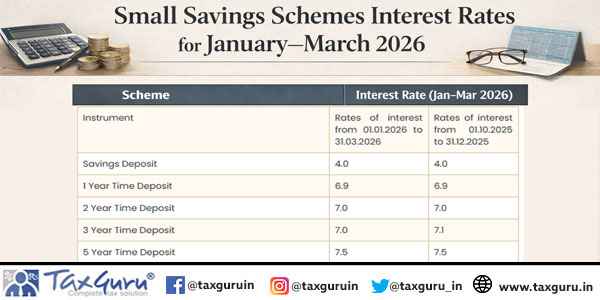
Small Savings Schemes Interest Rates for January–March 2026
MCA revises Indemnity Bond Norms for Government Company Strike-Offs

Sea Cargo Manifest and Transshipment (Fifth Amendment) Regulations, 2025

Deadline Extended for Principal and Compliance Officer Norms in IFSC

SEBI Mandates NISM Certification for AIF Compliance Officers
Customs Orders Video Recording of Passenger Interactions at Airports

Delayed Retraction Backfires: ICAI Finds CA Guilty in Bogus Donation Tax Evasion Scheme
Notifications/Circulars is TaxGuru’s central archive of statutory, departmental and regulatory documents. It brings together notifications, circulars, instructions, guidelines, orders, master circulars, master directions, press releases, public notices, regulations and trade notices covering Income Tax, GST, Customs, Company Law, Corporate Law, DGFT, Excise, Service Tax, FEMA/RBI, SEBI, finance and professional matters concerning CA, CS and CMA. Readers can use the archive and its existing subcategories to locate official and regulatory developments relevant to different subjects covered by TaxGuru.

