
#Section 69A
Log in to FollowLatest Section 69A updates, provisions, case laws, compliance requirements, tax implications and expert analysis under Income-tax law on TaxGuru.
Income Tax
Income Tax
Deletion of One Addition Will Not Wipe Out Penalty Levied on Another Surviving Income: ITAT Bangalore
Income Tax
Income Tax
Foreign Asset Reopening: ITAT Mumbai Applies 16-Year Limit to Non-Residents
Income Tax
Income Tax
ITAT Allows ₹20 Lakh Credit for Business Cash Deposits Against Section 69A Addition
Income Tax
Income Tax
ITAT Jaipur Deletes ₹31.40 Lakh Section 69A Addition on Explained Cash Trail
Income Tax
Income Tax
ITAT Restores ₹66.16 Lakh Demonetisation Appeal as Seven Notices Did Not Prove Service
Income Tax
Income Tax
NRE Salary Credits Not Unexplained U/s 69A Without Contradictory Evidence: ITAT Pune
Income Tax
Income Tax
Section 151 Approval After Section 148 Notice Invalidates Reassessment: ITAT Rajkot
Income Tax
Income Tax
ITAT Nagpur Holds 115BBE 60% Rate Inapplicable to FY 2016-17
Income Tax
Income Tax
Section 69 Inapplicable to Share Application Money Received & Recorded in Books: ITAT Raipur
Income Tax
Income Tax
Limited Scrutiny Can Examine Source, but It Cannot Tax Same Money Twice: ITAT Hyderabad
Income Tax
Income Tax
ITAT Delhi Deletes Section 69A Addition on Loan Repaid Through Banking Channels
Income Tax
Income Tax
ITAT Rajkot Deletes Section 271AAC Penalty on Estimated Addition
Income Tax
Income Tax
Demonetisation Cash Deposits Remanded for CBDT Verification: ITAT Mumbai
Income Tax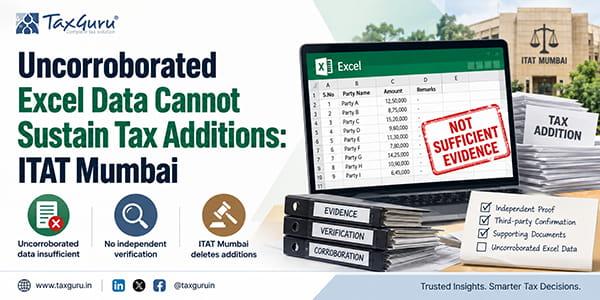
Income Tax
Uncorroborated Excel Data Cannot Sustain Tax Additions: ITAT Mumbai
Explore the latest Section 69A updates on TaxGuru, including relevant Income-tax Act provisions, rules, notifications, circulars, judicial decisions and compliance guidance. The coverage highlights important tax positions, procedural requirements, assessments, deductions, penalties and litigation developments to help taxpayers and professionals understand the practical implications of changes in income-tax law.

