Income Tax : The issue is understanding complex NPS rules, tax benefits, and recent updates. The framework clarifies withdrawal flexibility, ta...
Corporate Law : The case highlights NPS as one of the few deductions available in the new tax regime. Employer contributions remain fully deductib...
Income Tax : Even under the new tax regime, employer contributions to NPS remain deductible under Section 80CCD(2). This reduces taxable income...
Corporate Law : The 2025 amendments scrap key lock-ins and vesting conditions, allowing earlier and more flexible exits. The ruling links withdraw...
Income Tax : Learn about the tax treatment of key retirement benefits in India, including gratuity, pension, leave encashment, provident fund, ...
Corporate Law : Draft rules seek to bring petrol, gas, and hydrogen dispensers under approved testing centres. The key takeaway is enhanced regula...
Corporate Law : The Finance Ministry approved the extension of LC75 and Balanced Life Cycle (BLC) investment options to Central Government NPS/UPS...
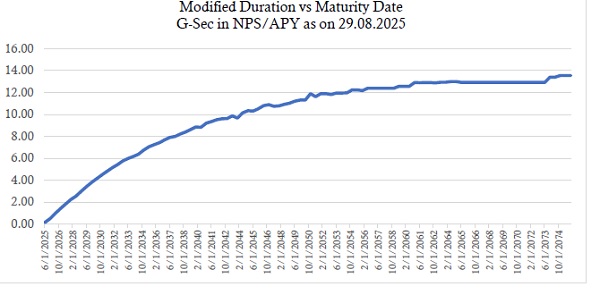
Corporate Law : PFRDA consults on adopting dual valuation (Accrual/MTM) for Government Securities in NPS/APY schemes to stabilize NAV, reduce inte...
Finance : PFRDA rationalizes NPS Auto Choice and Life Cycle Fund names to align with actual equity and risk profiles. Funds are now Common S...
Corporate Law : PFRDA releases an exposure draft proposing amendments to NPS regulations, focusing on increased flexibility for exits, withdrawals...
Corporate Law : The authority clarified AMC alignment between Tier I and Tier II accounts to ensure uniformity. It also exempted low-balance accou...
Corporate Law : The issue involved enhancing the existing NPS Swasthya scheme. The circular introduces PoC 2 with revised features to improve flex...
Corporate Law : Revised guidelines require Points of Presence to compensate subscribers for service delays or operational failures without waiting...
Corporate Law : PFRDA clarified that the NPS Vatsalya Scheme Guidelines 2025 take effect from 23 February 2026. The circular also directs stakehol...
Corporate Law : The regulator notified comprehensive 2025 guidelines to govern NPS Vatsalya, detailing eligibility, contributions, investments, an...
The amendment introduces a one-time option for UPS subscribers to revert to NPS within defined service timelines. The key takeaway is added flexibility, with clear conditions on contributions and loss of assured UPS benefits after switching.
The 2025 amendments scrap key lock-ins and vesting conditions, allowing earlier and more flexible exits. The ruling links withdrawals to corpus size, giving subscribers greater control over timing and form of payouts.
The regulator upheld the merger of Scheme A with larger asset classes citing its small corpus and concentration risk. The move improves diversification, stability, and long-term retirement outcomes for subscribers.
The 2025 amendments revise exit, withdrawal, and annuity norms across NPS categories. Clear thresholds and deferment options up to age 85 are introduced for subscribers.
PFRDA consolidates and updates NPS Tier-I & II investment rules for non-government sectors, specifying asset classes, limits, and rating norms. Ensures risk management and fiduciary responsibility.
The PFRDA issues an updated master circular superseding prior guidelines, clarifying investment norms for UPS/NPS/APY schemes and ensuring regulatory compliance.
The circular introduces Life Cycle 75 and Aggressive options, expanding NPS investment choices to six. The update allows higher equity exposure with structured age-based tapering.
Learn about the tax treatment of key retirement benefits in India, including gratuity, pension, leave encashment, provident fund, NPS, voluntary retirement, and retrenchment compensation under the Income-tax Act.
The Finance Ministry approved the extension of LC75 and Balanced Life Cycle (BLC) investment options to Central Government NPS/UPS subscribers, providing enhanced equity allocation choice.
DoPPW clarifies that Enhanced Family Pension is payable for 7 years or until the deceased would have reached 67 years, whichever is less, applicable to all cases.