Income Tax : This guide explains the penalty and prosecution framework under the Income-tax Act for AY 2026-27. It highlights the consequences ...
Income Tax : The Income Tax Department explains when interest is payable for delayed return filing, advance tax defaults, deferment of instalme...
Income Tax : The article explains how offences such as wilful tax evasion, failure to file returns, non-payment of TDS/TCS, falsification of re...
Income Tax : This article explains the advance tax provisions under the Income-tax Act, including liability thresholds, exemptions, and instalm...
Income Tax : This article outlines major offences under the Income-tax Act that may result in prosecution, including tax evasion, non-payment o...
Income Tax : Request to CBDT to permit filing of Form 10IC after expiration of time limit by condoning delay Issuance of Order under Section ...
Income Tax : All Odisha Tax Advocates Association has filed an PIl before Orissa High Court with following Prayers- (i) Admit the Writ Petition...
Income Tax : At the end of May the Income Tax Return forms are released for the Assessment Year 2015-16 and same been held back by finance mini...
Income Tax : ITAT held interest from head office and overseas branches is not taxable as payment to self, while interest from overseas banks al...
Income Tax : ITAT held an assessment passed after the taxpayer's death was invalid in law, quashed the order, and treated all remaining issues ...
Income Tax : ITAT Jaipur held that a one-day delay in filing Form 10DA could not defeat a Section 80JJAA deduction when the form was on record ...
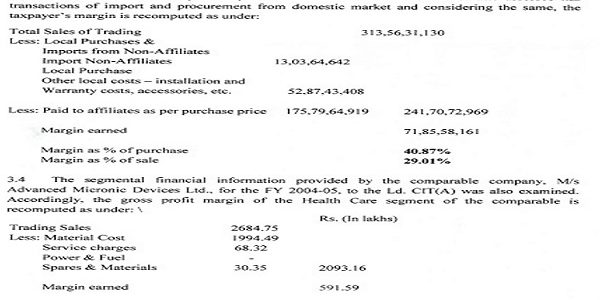
Income Tax : Transfer pricing principles dictate that a captive, risk-mitigated service provider could not be benchmarked against full-fledged,...
Income Tax : ITAT held ₹33 crore settled rights over the entire land, allowing full indexed acquisition cost and rejecting proportionate rest...
The Tribunal ruled that the limitation period for appeal commenced only when the assessee first received the ITBA screenshot revealing the basis of the outstanding demand.
The ITAT Mumbai held that notional rent cannot be taxed under “Income from Other Sources” without evidence that such income was actually received or receivable. The Tribunal deleted additions relating to shared premises with group companies.
Assessee argued that conclusions drawn from a 2005 survey on liaison offices could not be applied mechanically to later branch office structure. ITAT directed fresh examination of branch office’s actual functions and activities.
Tribunal ruled that unsold flats shown as stock-in-trade by a real estate developer cannot attract notional rent taxation. The decision relied on earlier judicial precedents recognizing such assets as part of business operations.
The Tribunal ruled that margins agreed under a Bilateral Advance Pricing Agreement may be used for non-covered AEs when transactions are functionally similar. The decision emphasized consistency and the lack of separate benchmarking by the TPO.
ITAT Surat restored reassessment appeals to the CIT(A) after observing that the assessee should receive one final opportunity to present evidence. The Tribunal imposed costs due to partial compliance before the appellate authority.
Delhi ITAT directed exclusion of a comparable company engaged in video conferencing solutions after noting that the DRP had already found it functionally incomparable to the assessee’s software distribution business.
The Mumbai ITAT held that expenditure on software licences, maintenance, database access and periodic upgrades is allowable as revenue expenditure. The Tribunal ruled that mere use of software does not create a capital asset or enduring ownership right.
ITAT Hyderabad held that CPC cannot make adjustments under Section 143(1)(a) without issuing prior intimation to the assessee as mandated by law. The Tribunal quashed the tax adjustment denying concessional tax benefits because the mandatory opportunity of response was not provided.
The Bangalore ITAT held that the Assessing Officer cannot estimate additional profit merely due to a fall in net profit ratio when books of account are not rejected. The Tribunal ruled that suspicion over self-made vouchers without concrete evidence cannot justify arbitrary additions.