
Courts: Supreme Court of India
Read latest Supreme Court of India judgments and orders on Income Tax, GST, Customs, Company Law and other taxation, corporate and commercial laws.

SC Upholds Section 63(4) as Hash Value Requirement Ensures Authenticity of Electronic Evidence

Decree Without Jurisdiction and Reasons Is Inexecutable: SC
Limitation Is Not a Jurisdiction Issue Under Section 9A CPC: SC

SC Clarifies Scope of “Expert” Under Section 63(4) BSA While Upholding Digital Evidence Safeguards

Full Disclosure Exists When CCI Had Complete Transaction Record: SC
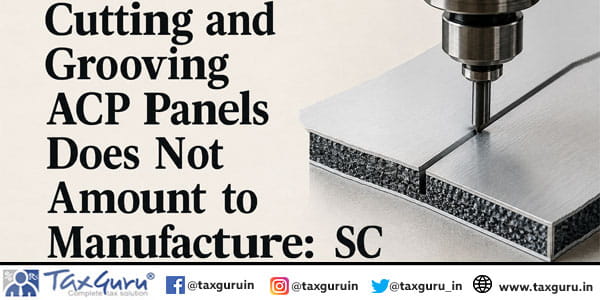
Cutting and Grooving ACP Panels Does Not Amount to Manufacture: SC
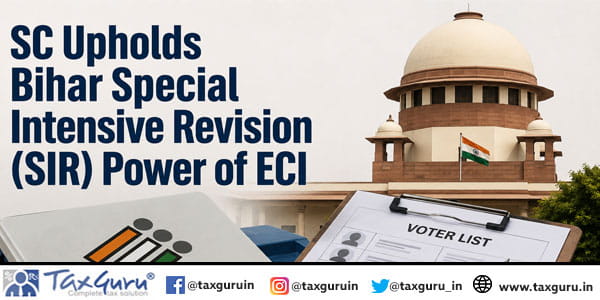
SC Upholds Bihar Special Intensive Revision (SIR) Power of ECI
SC Upholds Quashing of GST Demand as Opportunity of Hearing Was Illusory
n-Hexane Not ‘Motor Spirit’ Without Proof of Engine Use Suitability: SC
Duty Drawback Accrues After Approval: SC Upholds Delhi HC Ruling
Excess Stock Alone Cannot Justify GST Confiscation: SC Upholds HC Ruling
Excess Stock Alone Cannot Trigger GST Confiscation Proceedings: SC Upholds HC Ruling
Section 263 Revision Time-Barred as Lease Equalization Fund Was Not Subject of Reassessment: SC
Section 263 Limitation Runs From Original Assessment if Reassessment Issues Are Different: SC
Supreme Court of India brings together Supreme Court judgments and orders published on TaxGuru concerning taxation, corporate, commercial and regulatory laws. The archive covers Income Tax, GST, Customs, Company Law, insolvency, constitutional and other legal issues relevant to taxpayers, businesses and professionals. Readers can research authoritative rulings on statutory interpretation, substantial questions of law, constitutional issues and appeals from High Courts and tribunals. Chartered Accountants, advocates, tax professionals, companies and legal researchers can use this category to follow important Supreme Court jurisprudence relevant to taxation and business laws.

