
Courts: Supreme Court of India
Read latest Supreme Court of India judgments and orders on Income Tax, GST, Customs, Company Law and other taxation, corporate and commercial laws.

SC Restores MACT Award, Accepts ITR Filed After Accident as Income Proof

SC Upholds Section 16(2)(c), Denies ITC Where Supplier Fails to Deposit GST
SC Upholds Constitutional Validity of Personal Guarantors’ Insolvency Provisions Under IBC
SC Upholds Section 80-IB Deduction on Transport, Interest & Power Subsidies
SC Refuses to Revive Section 148 Reassessment Notices Against GE Group Companies
SC Dismissed SLP Against Penalty Notice Ruling Under Section 271(1)(c)
SC Upholds Allahabad HC Decision Describing GST Registration Cancellation as ‘Economic Death’ of Business
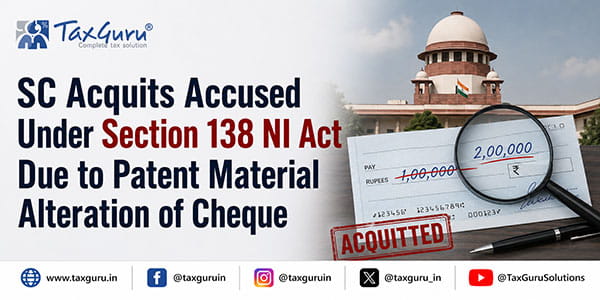
SC Acquits Accused Under Section 138 NI Act Due to Patent Material Alteration of Cheque
HC Cannot Revisit Final Relief Granted by Supreme Court: SC
Section 158BD Additions Cannot Rest on Assumptions Without Search Evidence: SC
SC Invokes Article 142 to End Marriage and Fix ₹5 Crore Alimony
SC Dissolves Marriage Under Article 142 Despite Wife Resiling From Mediation Settlement
SC Closes All Matrimonial Proceedings After Dissolving Marriage Under Article 142
SC Restores Mortgage Decree, Reduces Interest Rate to 12% Per Annum
Supreme Court of India brings together Supreme Court judgments and orders published on TaxGuru concerning taxation, corporate, commercial and regulatory laws. The archive covers Income Tax, GST, Customs, Company Law, insolvency, constitutional and other legal issues relevant to taxpayers, businesses and professionals. Readers can research authoritative rulings on statutory interpretation, substantial questions of law, constitutional issues and appeals from High Courts and tribunals. Chartered Accountants, advocates, tax professionals, companies and legal researchers can use this category to follow important Supreme Court jurisprudence relevant to taxation and business laws.

