
Courts: Supreme Court of India
Read latest Supreme Court of India judgments and orders on Income Tax, GST, Customs, Company Law and other taxation, corporate and commercial laws.

SC Allows Partial Input Tax Rebate on Sale of Exempt By-Products Under KVAT Act
Section 30(2) Rent Deposit Protects Tenant from Eviction Under U.P. Rent Act: SC

SC Sets Aside HC Order Limiting SARFAESI Earnest Money Forfeiture

Section 263 Limitation Runs from Original Assessment for Unrelated Reassessment Issues: SC

SC Dismisses Excise Appeal on Bought-Out Items Following Department’s Contrary Stand
Round-Trip Cruise Operator Eligible for Section 44B Presumptive Taxation Scheme: SC

SC Clarifies Christian Succession: Property in Wives’ Names Belongs to Them
SC Holds Registrar Can Amend Service Rules; Executive Communication Valid Under Statutory Authority
Supreme Court: Insurer Gets ‘Pay and Recover’ Relief Where Driver’s Licence Was Not Valid on Date of Accident

SC Holds Air Force Personnel Need Prior Permission for Civil Employment; NOC Not a Matter of Right

SC Holds Mini-Trial Impermissible While Quashing FIRs in Corruption Cases

SC to Decide if Section 74(2) Six-Month SCN Time Limit Is Mandatory
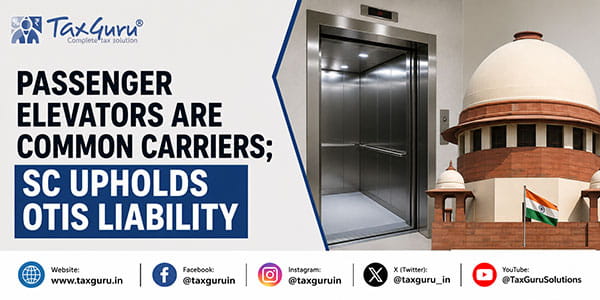
Passenger Elevators Are Common Carriers; SC Upholds OTIS Liability
Miscellaneous Application Cannot Reopen Finally Decided Appeals: SC
Supreme Court of India brings together Supreme Court judgments and orders published on TaxGuru concerning taxation, corporate, commercial and regulatory laws. The archive covers Income Tax, GST, Customs, Company Law, insolvency, constitutional and other legal issues relevant to taxpayers, businesses and professionals. Readers can research authoritative rulings on statutory interpretation, substantial questions of law, constitutional issues and appeals from High Courts and tribunals. Chartered Accountants, advocates, tax professionals, companies and legal researchers can use this category to follow important Supreme Court jurisprudence relevant to taxation and business laws.

