
Courts: All ITAT
Read latest ITAT judgments and orders on Income Tax, including assessments, deductions, TDS, capital gains, transfer pricing, penalties and other tax disputes.

Ahmedabad ITAT Condoned 1,876-Day Delay in ₹2.01-Crore Exemption Claim

ITAT Pune allows Section 80P deduction on interest from cooperative and nationalised banks

ITAT Delhi deletes Section 270A penalty for failure to specify misreporting limb

ITAT Dehradun deletes Section 270A penalty for change in misreporting charge

ITAT Bangalore Allows Section 80P Deduction for Nominal Member Credit and Bank Interest
Section 2(14): Rural Land Exempt, ₹1.28 Crore Addition Deleted Despite TDS u/s 194-IA
ITAT Delhi Quashes Section 263 Revision on Interest Under Section 28 of Land Acquisition Act
Rule 46A: ₹1.01 Crore u/s 69A Addition Restored to AO for Fresh Examination
ITAT Pune Allows Full Section 10(10B) Exemption on BSNL VRS Compensation
ITAT Delhi Deletes Rs. 14.88 Lakh Notional Rent Addition for Vacant Property

ITAT Ranchi Excludes Hindustan Copper, Revises Interest and Upholds 0.5% Corporate Guarantee
ITAT Delhi Quashes Reopening Based on Third-Party Tally Data & Cross-Examination Denial
ITAT Ahmedabad Allows BSNL VRS Exemption Claim Raised First Time in Appeal
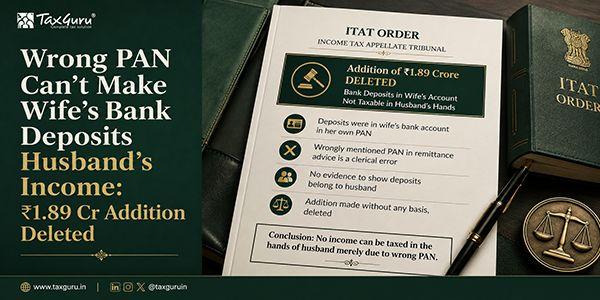
Wrong PAN Can’t Make Wife’s Bank Deposits Husband’s Income: ₹1.89 Cr Addition Deleted
All ITAT brings together Income Tax Appellate Tribunal judgments and orders from ITAT benches across India. The archive covers income-tax disputes involving assessments and reassessments, business income, deductions, exemptions, capital gains, TDS, transfer pricing, international taxation, penalties, unexplained income, search assessments and other provisions of the Income-tax Act. Chartered Accountants, advocates, tax professionals, businesses and taxpayers can use this consolidated TaxGuru category to research ITAT precedents across different benches and follow developments in income-tax jurisprudence. Individual ITAT bench categories are also available for location-specific decisions.

