
Courts: All High Courts
Read latest High Court judgments and orders on Income Tax, GST, Customs, Company Law and other taxation, corporate, commercial and regulatory matters.

Unregistered Partnership Bars Partner’s Money Recovery Suit: Gujarat HC

High-Pitched Assessment: Bombay HC Stays Tax Recovery Pending Appeal

Telangana HC Allows Fresh Revocation Application After GST Registration Cancellation

Customs Broker Penalty Set Aside as Abetment of Prohibited Export Not Established: Madras HC
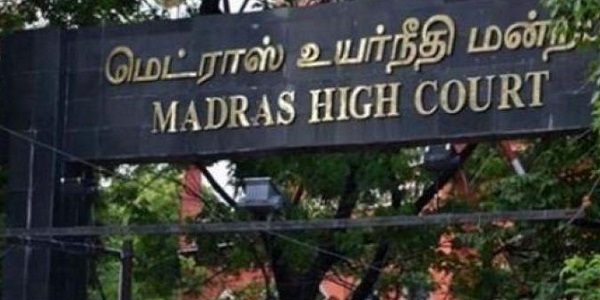
Madras HC Quashes Section 153B Search Assessments as Time-Barred After TOLA Computation

Delhi HC Grants PMLA Bail After Applicant Crosses Half of Maximum Sentence

Himachal Pradesh HC Allows Fresh Section 147A Challenge With 90-Day Protection
Delhi HC Stays Section 148 Proceedings Over ₹17.66 Crore Cash Already Offered to Tax

Madras HC Permits Application for Return of Detained Gold Jewellery for Re-Export

Punjab & Haryana HC Orders Fresh GST Audit After Considering Taxpayer’s Reply
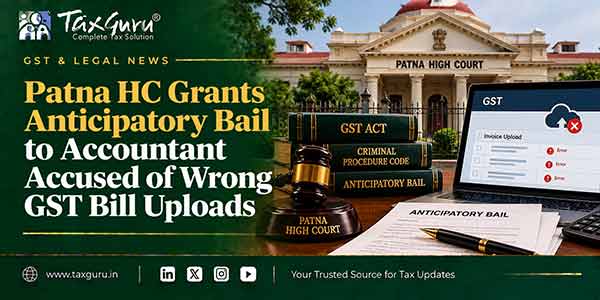
Patna HC Grants Anticipatory Bail to Accountant Accused of Wrong GST Bill Uploads

Calcutta HC Sets Aside GST Refund Orders for Grounds Beyond Show Cause Notice
Ammonia Gas Storage Tank Integral to Plant Not Taxable as Building: Punjab & Haryana HC
Rajasthan HC Stays Section 153C Proceedings Pending Supreme Court Decision
All High Courts brings together judgments and orders of High Courts across India published on TaxGuru. The archive covers Income Tax, GST, Customs, Company Law, Corporate Law, insolvency, commercial laws and other taxation and regulatory matters. Readers can research important questions of law, constitutional challenges, writ petitions, statutory appeals and other proceedings decided by different High Courts. Chartered Accountants, advocates, tax professionals, businesses and legal researchers can use this consolidated archive to follow High Court jurisprudence across India. Separate High Court categories are available for court-specific judgments and orders.

